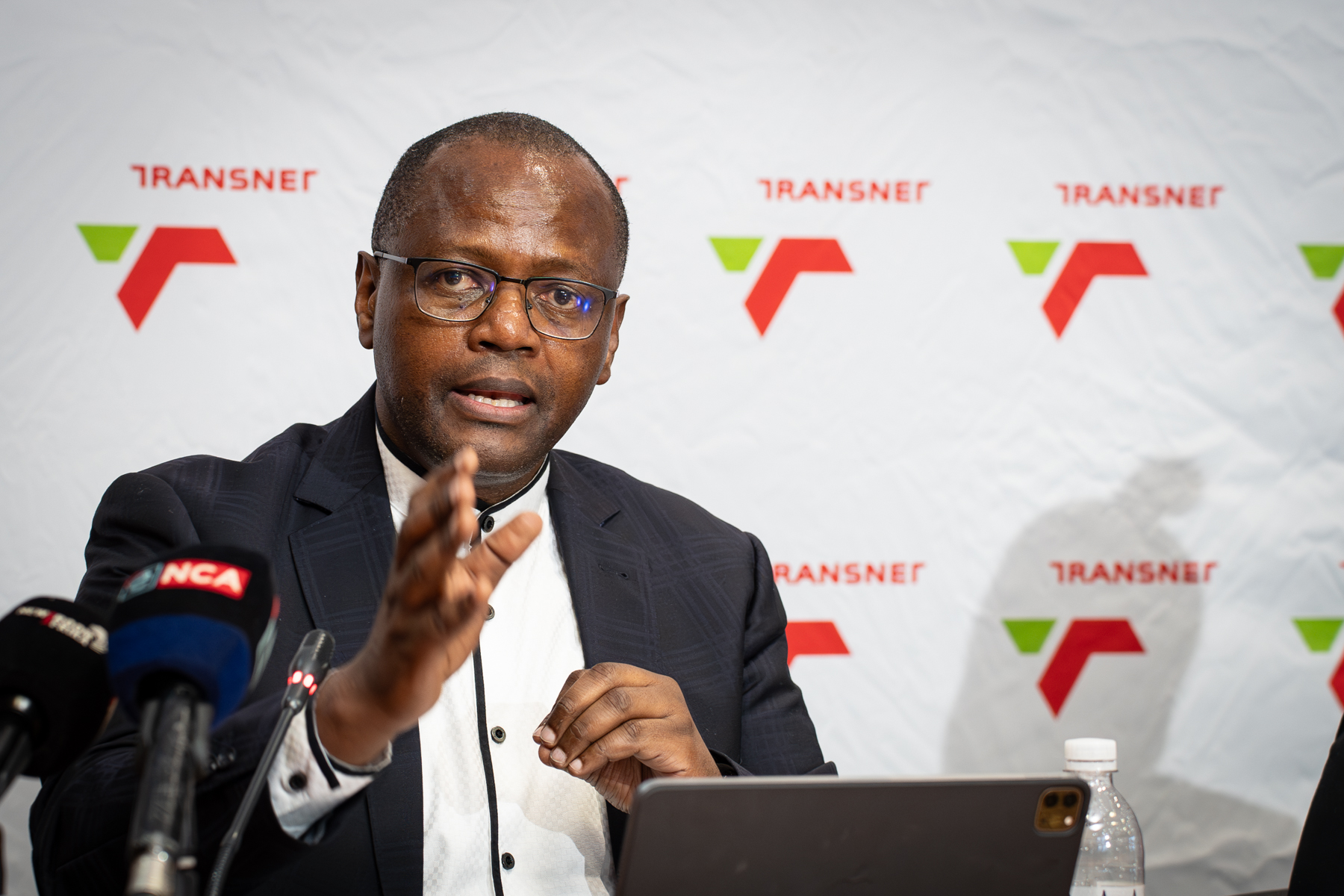
Transnet – Chairperson’s Remarks / Media Briefing on the State of the Business
We, as Transnet Board, deemed it necessary to have this engagement with you, to provide an update on key issues in the business. The matters we are providing you an update on have been covered extensively in your respective media houses. Having said that, I wish to bring to your attention that, as our financial year ends on 31 March, we are currently in a closed period, and the audit process of our numbers is currently underway. We will, therefore, endeavour to provide as much detail as we can, taking into account this limitation.
Stabilising the executive leadership
This is also the first opportunity many of you have to interact with the newly-appointed executives, and I encourage you to make the most of it. Strong governance structures and rigorous accountability are at the heart of our ability to deliver on our mandate. Now we have a stable leadership team to drive the strategic direction of the business and help us implement our key objectives. In February 2024, we announced the appointment of Michelle Phillips as Group CE, Nosipho Maphumulo as Group CFO and Russell Baatjies as CE for Transnet Freight Rail (TFR). They are here with us and have been introduced. I hope you will continue to engage with them. The recruitment process for the Group COO is currently underway, and we expect to conclude it soon, hopefully by late May or June.
The Recovery Plan
When the Transnet Board was appointed in July last year, the company was grappling with a number of challenges that threatened our operational and financial sustainability. We recognised the urgency to address the numerous constraints on Transnet’s operational performance and to stabilise and improve volumes.
This led to the development of the Recovery Plan, which we began implementing in October 2023. The Plan has as its objective the stabilisation of operational performance in the first phase, and significant improvement in operational and financial performance for the year ending March 2025. We are pleased to say Transnet’s journey to recovery is on course. We are executing our plans to enhance operational and financial performance for long-term, sustainable growth.
As part of the implementation of the Recovery Plan, we have developed a number of tactical initiatives to drive volume recovery and improve efficiencies across our divisions. As we pursue the objectives of the Recovery Plan, we rely on our employees, labour unions and customers to execute with urgency and efficiency, and on structured collaboration with our trusted partners, especially through the National Logistics Crisis Committee.
Of course, we are not out of the woods yet. But the progress is real, the business is being stabilised, and we are increasingly optimistic about the future.
We would like to take some time today to talk you through our progress – in particular, what is being done and why it is making an impact – and I am joined by some of the executives who have played a crucial role over the past few months, so that they can provide specific insight on the progress.
We believe – particularly in light of the overall state of the South African and global economies – that the progress we have made thus far is significant and meaningful, and should be appreciated by all those who understand the complexity of organisational turnarounds – particularly a logistics business of Transnet’s size and complexity, which has dependencies with so many other components of the national and global economy.
Rail Reform
Transnet is implementing its Recovery Plan in the context of fundamental changes in the legislative and regulatory regime in which we operate, as necessitated by the National Rail Policy and the Freight Logistics Roadmap. Transnetfully embraces this policy imperative, and the company is making solid progress in its implementation, in line with the expectations set out by Government.
It is a process we support wholeheartedly because it opens numerous opportunities for Transnet, by ensuring better use of the rail network. We also anticipate that new users may introduce alternative technologies and innovation that will make the system more effective and improve service quality. Access fees will be used to maintain the rail network to a standard required for safe and reliable operations.
Transnet remains committed to meeting the deadlines that have been set for this process and we continue to engage with Government, including on areas where more time may be required, to ensure that implementation does not have any unintended consequences.
We particularly appreciate the positive comments that have come from some private sector rail operators who see the long-term benefits that this move will have on their own business development, and on the economy as a whole. We therefore look forward to the public comments process to be undertaken by the Interim Rail Economic Regulatory Capacity (IRERC), where we will have an opportunity to share our considered views.
Legal update – ICTSI
When we launched the Recovery Plan in October 2023, we had said that we would accelerate private sector participation (PSPs) and strategic transactions, in our quest for recovery.
The infrastructure and design of the Durban Container Terminal (DCT2) has remained the same since 1963. DCT2 manages approximately 65% of container cargo in highly constrained conditions and is operating at critical levels, beyond the original design specifications. Over the past 20 years, congestion at the terminal due to shipping traffic and limited operational capacity has led to well-known and publicised backlogs at the Port of Durban.
The efficiency of the South African ports system affects the country’s trade with the rest of the world. Congestion, delay and increased cost of moving goods into and out of the country has had has created serious challenges for the economy.
International comparisons strongly suggest that South African ports are failing to achieve competitive outcomes. According to the World Bank’s Container Port Performance Index 2020 published in 2021, all of South Africa’s commercial ports cluster at the bottom of the 351 ports evaluated based on objective data from shipping lines, and underperform all other African ports included in the survey such as the Port of Mogadishu in Somalia, the Port of Maputo in Mozambique and the Port of Luanda in Angola.
The introduction of a private sector partner at Pier 2 is a long-standing priority of national government. The recovery of the Port of Durban and the expansion and modernisation of the container capacity at Pier 2 is therefore an imperative of the government and also of Transnet.
We have therefore noted the legal challenge to the selection of International Container
Terminal Services, Inc. (ICTSI) as the preferred bidder to enter into contract negotiations for the establishment of ajoint partnership to manage the upgrade and development of Pier 2 at the Durban Container Terminal. The process of selecting ICTSI was rigorous, competitive, and fair and complied with our governance standards. Transnet will defend its procurement process and is currently waiting on the allocation of a hearing date.
Let me take this opportunity to once again affirm that Transnet’s commitment to attract private sector participation across the business is going to continue, as part of our corporate strategy and in accordance with Government policy.
Balance sheet optimisation
Shifting the focus to our finances, in his Medium-Term Budget, the Minister of Finance announced a government guarantee of R47bn to allow Transnet to meet its debt obligations and free up resources to improve operations. Transnet is critical to the South African economy, and therefore its sustainability remains important. In line with the Government Guarantee Framework and our Recovery Plan, we have initiated a balance sheet optimisation project to present initiatives to “optimise” the Transnet balance sheet. There are legacy issues that need redress, and these are the high levels of debt and the maintenance backlog which we have reported on in the past and these require restructuring and optimisation of the balance sheet. In this regard, during the current financial year, we will be working with Government to determine the optimal solution to improve the financial profile of Transnet to mitigate risks of the execution of the Recovery Plan and to improve the financial ratios. We will also work closely with all the relevant stakeholders such as the ratings agencies and investors and the lenders in finding a sustainable balance sheet model for Transnet – now and for the future. Importantly, Transnet’s operational and financial performance as well as its financial constraints will inform the support required by Government.
Transnet is critical to the South African economy. Therefore, its sustainability remains important. We trust that for this reason a structural solution will have to be agreed upon. Transnet will continue to collaborate with all the relevant Ministries and the officials to forge a sustainable solution for Transnet.
Conclusion
As I head towards conclusion, we remain cautiously optimistic about the state of the Transnet ecosystem. We forge ahead with implementation of Phase 2 of the Recovery Plan, which commenced on 1 April 2024.
From our interaction with staff, organised labour, customers and other stakeholders, we are detecting a new energy anda new focus. As the Board, we find this deeply encouraging. The Presidency and the NLCC continue to play an important role in together identifying and resolving any challenges and implementing sustainable solutions.
On our side, we want to emphasise our commitment to openness, transparency and to understand that we cannot solve all of the problems and challenges on our own. But together with our partners – both internally and externally – we will be able to achieve success. The recovery journey will be long. But we continue to focus on meeting the targets we have set, in spite of the challenging environment in which we carry out this task, because we understand fully the cost of not doing so — and, conversely, the benefit to our economy when Transnet plays its rightful, catalytic role.