Rössing Uranium Upbeat on TransNamib’s N$2.6 Billion Loan
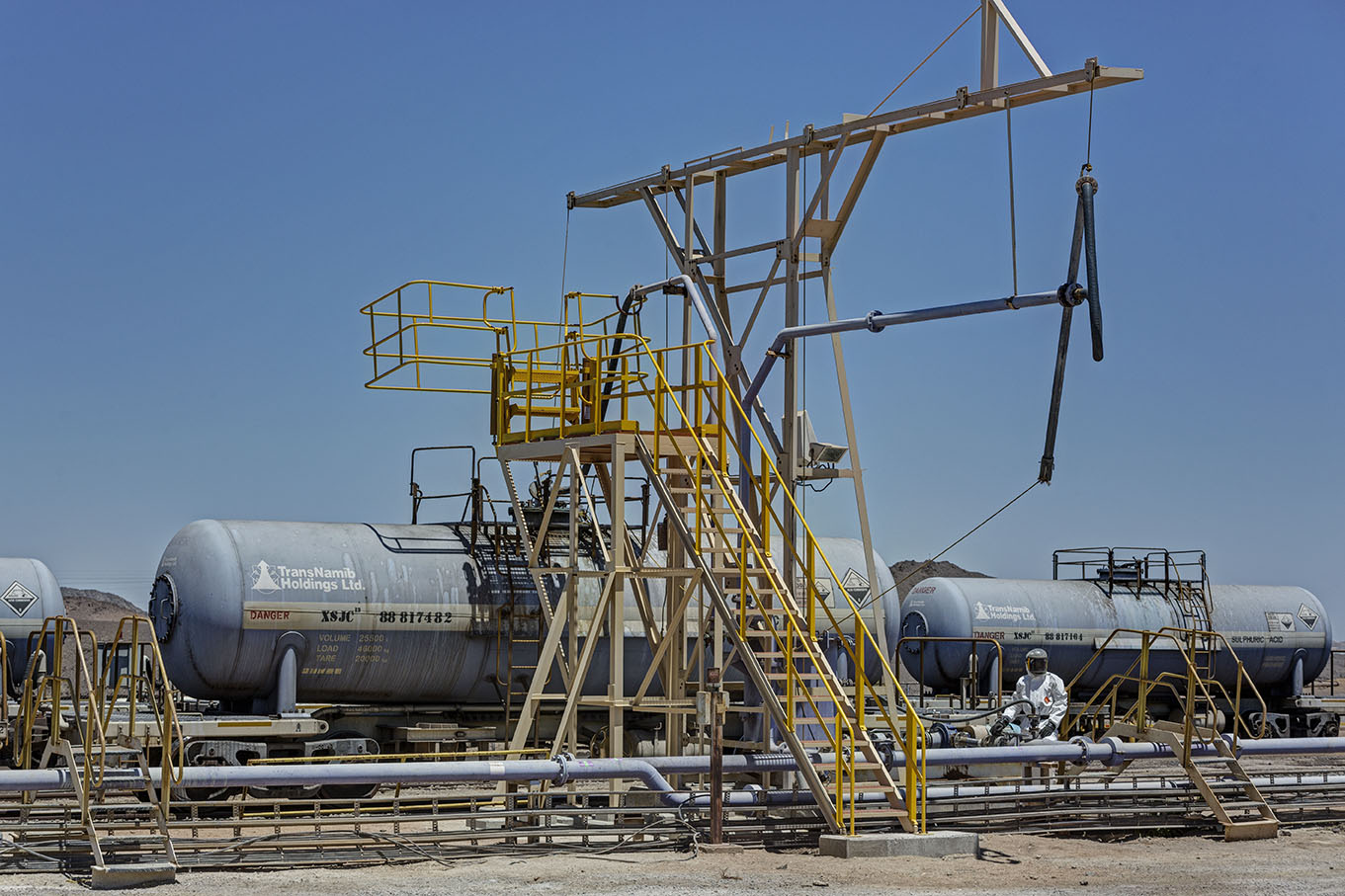
Namibia’s Rössing Uranium, which on average transports between 170,000 and 190,000 tons per annum of sulphuric acid on the railway line operated by TransNamib, has revealed that the main challenge the company faces is TransNamib’s ageing fleet of rolling stock, which causes delays in the delivery of critical commodities. Rössing uses TransNamib mainly for the transportation of sulphuric acid and uranium oxide, as well as the delivery of diesel.
Rössing Uranium Limited Managing Director, Johan Coetzee, said that to address these challenges, regular stakeholder meetings are held with TransNamib and that at an operational level, Rössing is assisting TransNamib with the turnaround time on the availability of locomotives by off-loading during weekends where possible.
Coetzee further mentioned the positive outcomes from the recent loan awarded by the Development Bank of Southern Africa (DBSA) and the Development Bank of Namibia (DBN) worth N$2.6 billion, which will be utilised by TransNamib Holdings to acquire new rolling stock.
TransNamib announced recently that it had successfully met all conditions to access the secured funding of N$2.6 billion from the Development Bank of Namibia (DBN) and the Development Bank of Southern Africa (DBSA). The funding is expected to enable the company to address its locomotive capacity challenges effectively. The loan will be used for the remanufacturing of rolling stock, acquisition of new rolling stock, modernisation of the TransNamib workshop, and upgrading of signalling equipment, including spares and associated equipment.
Coetzee went on to say that the loan is expected to significantly alleviate the current challenges Rössing Uranium faces regarding the reliability and availability of locomotives and rolling stock.
In addition to the delivery of sulphuric acid, approximately 1.2 million litres of diesel per month are railed to the site by Total Namibia, also using TransNamib.
Last year, Rössing transported 185,000 tons of sulphuric acid and 3,015 tonnes of uranium oxide in containers via railway. In 2022, 183,000 tons of sulphuric acid and 2,864 tonnes of U3O8 in containers were transported via railway.
Coetzee disclosed Rössing’s extension plan, which has extended the life of the mine from the planned closure in 2026 to 2036. The expansion will include a solar plant and changes in the operating plant to cope with the changing composition of the ore under the extended life of the mine.
Regarding the company’s working relationship with port operator, Namport, Coetzee revealed that Rössing leases dedicated sulphuric acid facilities in the Walvis Bay port from Namport. The company also imports major consumables including sulphuric acid, manganese dioxide, and heavy earthmoving tyres through Walvis Bay.
Walvis Bay is also used by Rössing for the export of uranium oxide to international markets. Coetzee said the Walvis Bay port is extremely important to the company’s logistical network and continued operational strategy.
Written for Railway Africa Magazine by: Chamwe Kaira