Week: 2026 – 06Print Edition:Edit Article
  • 10. Completed
Item 1

Zambia Reaffirms Commitment to Nacala Corridor Development

Stakeholders from government, logistics, and the private sector convened on 28 January 2026 for a high-level webinar on “Strengthening the Global Supply Chain through Nacala Corridor,” where Zambia reaffirmed its commitment to advancing the Nacala Development Corridor (NDC) as a key driver of regional trade, connectivity, and economic growth.

Delivering the keynote address, Mrs Irene Tembo, Chief Planner and the Head of Project in Zambia for the Secretariat for the Nacala Development Corridor from the at the Ministry of Transport and Logistics, highlighted Zambia’s strategic geographic position in South-Central Africa, bordered by eight countries and closely linked to a ninth across Lake Tanganyika. Zambia’s central location and government policy to transform the country into a land-linked hub provide access to multiple regional transport corridors connecting to all SADC seaports.

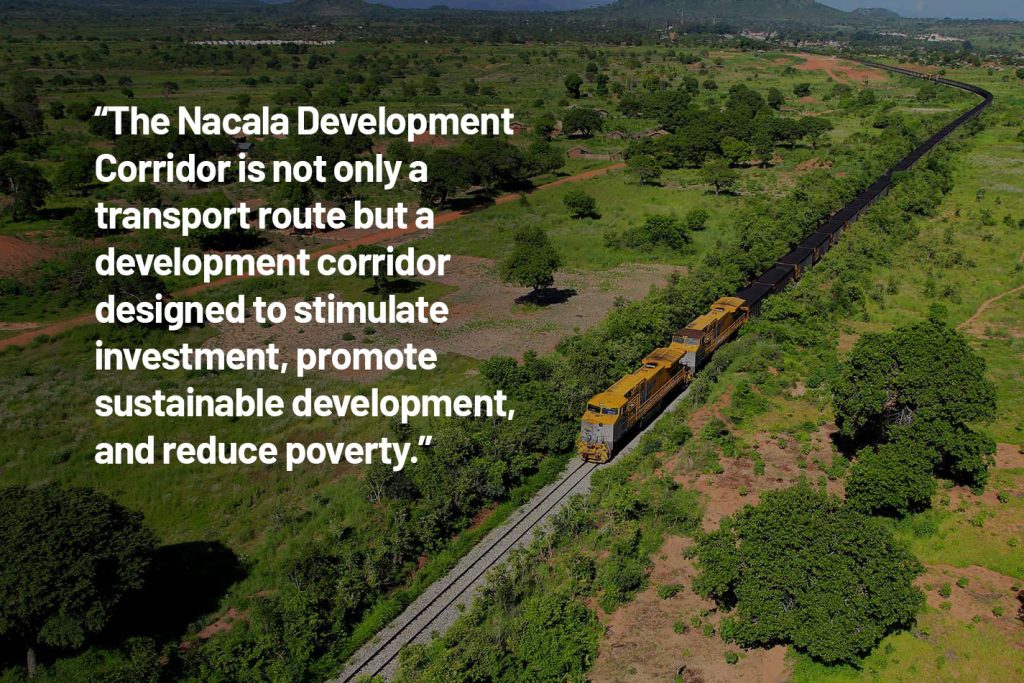
“The Nacala Development Corridor is not only a transport route but a development corridor designed to stimulate investment, promote sustainable development, and reduce poverty.

The webinar reviewed the progress made across transport infrastructure, trade facilitation, logistics, border management, and institutional coordination. While progress has been recorded, participants acknowledged uneven implementation and the need for stronger coordination among agencies and deeper private sector engagement.

One Stop Border Posts (OSBPs) were cited as a major success area, with six priority OSBPs identified, including Cassacatiza/Chanida (Mozambique–Zambia) and Mchinji/Mwami (Malawi–Zambia). These are expected to significantly reduce clearance times and improve efficiency for businesses and transporters.

On rail development, Nacala Logistics underscored the Port of Nacala’s competitiveness, citing its natural deep-water harbour, modern handling equipment, expanding capacity, and ongoing digitalisation. Zambia reiterated the importance of extending rail operations to Chipata and highlighted the recently signed MoU to develop the Chipata–Serenje railway line involving Zambia, Malawi, Mozambique, and the Democratic Republic of Congo (DRC).

The facility is expected to include modern cargo handling equipment, cold-chain storage, warehousing, and digitalised operations. JICA and the European Union have expressed interest in supporting its development.

The webinar reinforced the Nacala Corridor’s growing role in strengthening regional and global supply chains and highlighted the importance of continued collaboration among governments, development partners, and the private sector.
Item 2

Contributor:

Zambia Reaffirms Commitment to Nacala Corridor Development

Stakeholders from government, logistics, and the private sector convened on 28 January 2026 for a high-level webinar on “Strengthening the Global Supply Chain through Nacala Corridor,” where Zambia reaffirmed its commitment to advancing the Nacala Development Corridor (NDC) as a key driver of regional trade, connectivity, and economic growth.

Delivering the keynote address, Mrs Irene Tembo, Chief Planner and the Head of Project in Zambia for the Secretariat for the Nacala Development Corridor from the at the Ministry of Transport and Logistics, highlighted Zambia’s strategic geographic position in South-Central Africa, bordered by eight countries and closely linked to a ninth across Lake Tanganyika. Zambia’s central location and government policy to transform the country into a land-linked hub provide access to multiple regional transport corridors connecting to all SADC seaports.

“The Nacala Development Corridor is not only a transport route but a development corridor designed to stimulate investment, promote sustainable development, and reduce poverty.

The webinar reviewed the progress made across transport infrastructure, trade facilitation, logistics, border management, and institutional coordination. While progress has been recorded, participants acknowledged uneven implementation and the need for stronger coordination among agencies and deeper private sector engagement.

One Stop Border Posts (OSBPs) were cited as a major success area, with six priority OSBPs identified, including Cassacatiza/Chanida (Mozambique–Zambia) and Mchinji/Mwami (Malawi–Zambia). These are expected to significantly reduce clearance times and improve efficiency for businesses and transporters.

On rail development, Nacala Logistics underscored the Port of Nacala’s competitiveness, citing its natural deep-water harbour, modern handling equipment, expanding capacity, and ongoing digitalisation. Zambia reiterated the importance of extending rail operations to Chipata and highlighted the recently signed MoU to develop the Chipata–Serenje railway line involving Zambia, Malawi, Mozambique, and the Democratic Republic of Congo (DRC).

The facility is expected to include modern cargo handling equipment, cold-chain storage, warehousing, and digitalised operations. JICA and the European Union have expressed interest in supporting its development.

The webinar reinforced the Nacala Corridor’s growing role in strengthening regional and global supply chains and highlighted the importance of continued collaboration among governments, development partners, and the private sector.

Web

Content Visibility:

SEO Title
Zambia Reaffirms Commitment to Nacala Corridor Development
SEO Description
Zambia reaffirms its commitment to the Nacala Development Corridor, highlighting rail, border, and logistics initiatives to strengthen regional and global supply chains.
SEO Keywords


SEO Keyphrase
Item 2

Please tag africast / landlinked zambia

https://www.railwaysafrica.com/news/zambia-reaffirms-commitment-to-nacala-corridor-development

Zambia has reaffirmed its commitment to advancing the Nacala Development Corridor as a strategic trade and logistics route linking South-Central Africa to global markets.
Speaking during a high-level webinar, officials highlighted progress in rail development, One Stop Border Posts, and logistics infrastructure, alongside renewed focus on private sector participation and cross-border coordination.

Read more:

#Zambia #NacalaCorridor #RegionalTrade #LogisticsAfrica #RailDevelopment #SupplyChains #SADC #Infrastructure

Item 2

Contributor:

Zambia Reaffirms Commitment to Nacala Corridor Development

Stakeholders from government, logistics, and the private sector convened on 28 January 2026 for a high-level webinar on “Strengthening the Global Supply Chain through Nacala Corridor,” where Zambia reaffirmed its commitment to advancing the Nacala Development Corridor (NDC) as a key driver of regional trade, connectivity, and economic growth.

Delivering the keynote address, Mrs Irene Tembo, Chief Planner and the Head of Project in Zambia for the Secretariat for the Nacala Development Corridor from the at the Ministry of Transport and Logistics, highlighted Zambia’s strategic geographic position in South-Central Africa, bordered by eight countries and closely linked to a ninth across Lake Tanganyika. Zambia’s central location and government policy to transform the country into a land-linked hub provide access to multiple regional transport corridors connecting to all SADC seaports.

“The Nacala Development Corridor is not only a transport route but a development corridor designed to stimulate investment, promote sustainable development, and reduce poverty.

The webinar reviewed the progress made across transport infrastructure, trade facilitation, logistics, border management, and institutional coordination. While progress has been recorded, participants acknowledged uneven implementation and the need for stronger coordination among agencies and deeper private sector engagement.

One Stop Border Posts (OSBPs) were cited as a major success area, with six priority OSBPs identified, including Cassacatiza/Chanida (Mozambique–Zambia) and Mchinji/Mwami (Malawi–Zambia). These are expected to significantly reduce clearance times and improve efficiency for businesses and transporters.

On rail development, Nacala Logistics underscored the Port of Nacala’s competitiveness, citing its natural deep-water harbour, modern handling equipment, expanding capacity, and ongoing digitalisation. Zambia reiterated the importance of extending rail operations to Chipata and highlighted the recently signed MoU to develop the Chipata–Serenje railway line involving Zambia, Malawi, Mozambique, and the Democratic Republic of Congo (DRC).

The facility is expected to include modern cargo handling equipment, cold-chain storage, warehousing, and digitalised operations. JICA and the European Union have expressed interest in supporting its development.

The webinar reinforced the Nacala Corridor’s growing role in strengthening regional and global supply chains and highlighted the importance of continued collaboration among governments, development partners, and the private sector.

Print

Magazine Section

Africa Update

Instructions

No image supplied so perhaps just use the land linked zambia logo..