Week: 2025 – 39Print Edition:Edit Article
  • 10. Completed
Item 1

Zak Supplies Forged Joggle Fish Plates for Safer Rail Operations

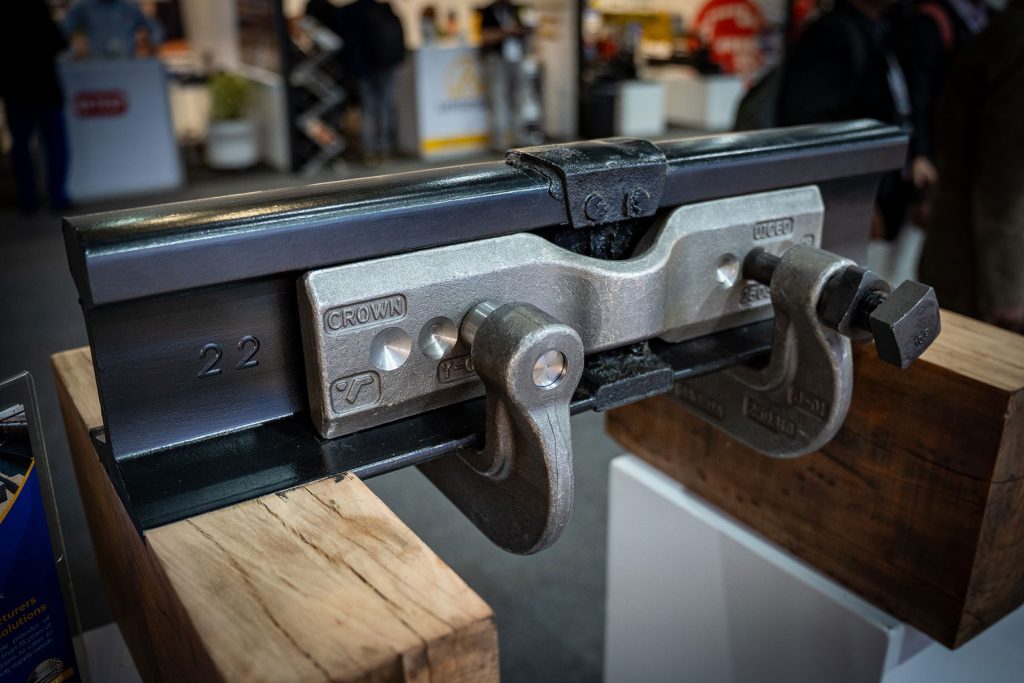
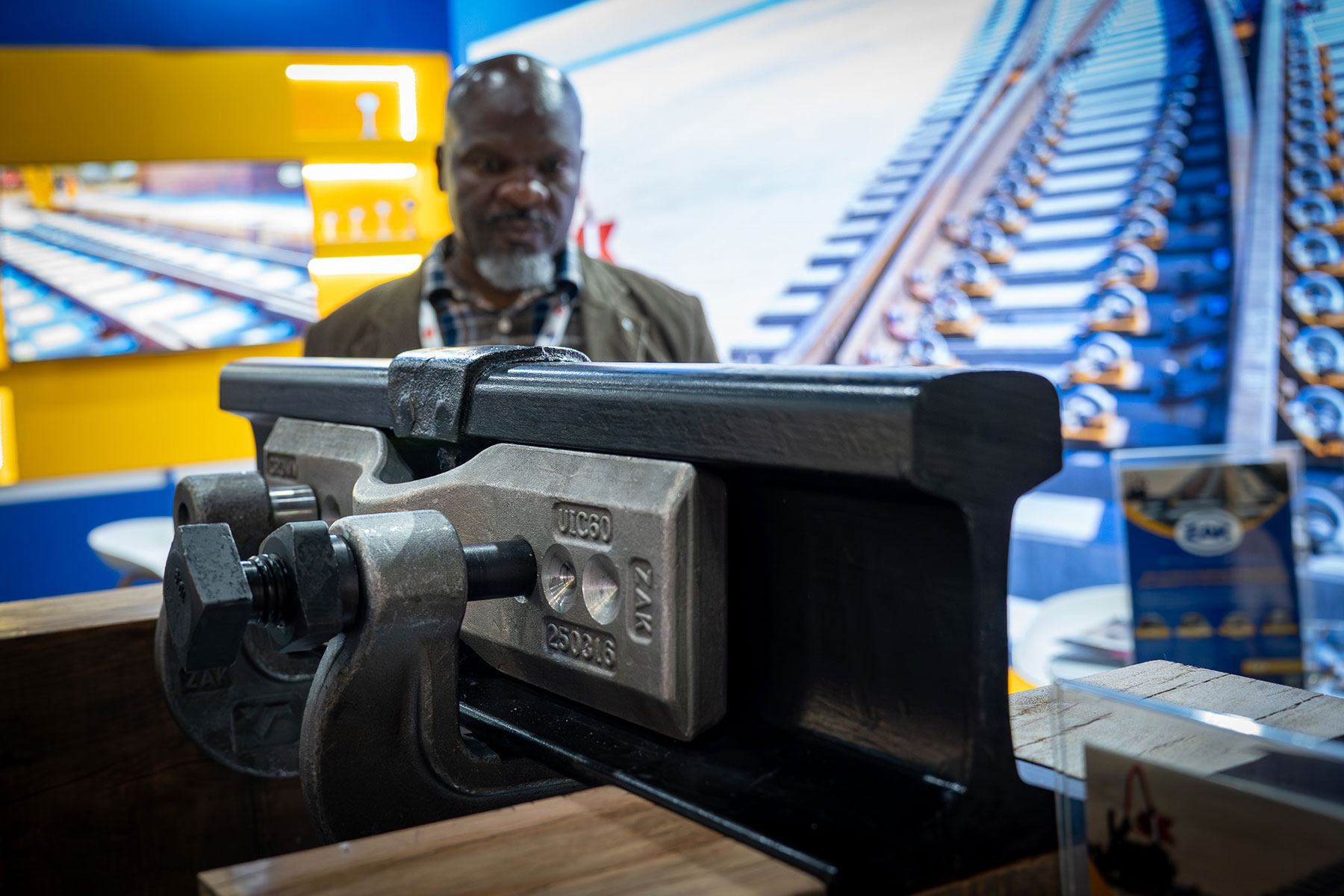
Zak, the rail products subsidiary of Clyde Industrial Corporation (Pty) Ltd, (Clyde), has introduced a forged joggle fish plate with G-clamp, designed for use on continuous welded rail (CWR), providing additional safety and reliability for rail operations during and after thermite welds.

The joggle fish plate and G-clamps are a temporary fastening/supporting rail component, installed after the exothermic weld is completed, ensuring the weld remains secure while trains continue to operate. Once the weld has been ultrasonically tested and certified as intact, the plate is removed and reused. On certain heavy-haul lines, including South Africa’s Ore Line, joggle fish plates remain in place permanently due to the need for additional confidence in weld integrity.

Forged for Strength and Reliability

Zak’s joggle fish plates and G-clamps are forged from C45 and C40 steel in line with Transnet specifications. Forging, unlike casting, ensures a stronger product by refining the grain structure during the heating and cooling process. Forged products also eliminate common casting flaws such as surface risers caused by sand moulds.

“When cast joggle fish plates are installed, uneven high spots prevent a proper seat against the rail. As trains pass, grinding occurs, loosening the fastening and requiring repeated maintenance,” explained Pieter Swart, Engineering Technician at Zak. “Our forged plates, with machined holes and smooth bearing areas, ensure a precise fit and long-lasting rigidity.”

Design Advantages

The joggle fish plate incorporates several design features:

  • Symmetrical fit – the joggle fish plate can be installed either way up, simplifying application in track.
  • Extended bolt threads – allowing easier fitting, clamping and improved ergonomics for welders and perway labour.
  • Chamfered edges – preventing wheel flange contact in areas where high rail wear occurs, improving safety.
  • Compatibility – designed specifically for UIC 60 and 60E1 rail profiles used on heavy-haul lines.

Orders and Supply

Zak recently secured an order from Transnet for the Ore Line for 6,000 joggle fish plates and 7,500 G-Clamps, with 2,400 units of each already delivered and the remainder scheduled for completion by the end of November.

“This product represents a benchmark for Transnet,” added Swart. “It has already positioned Zak as a registered vendor and reflects our commitment to delivering solutions that improve safety and efficiency in the rail sector.”
Item 2

Contributor: Phillippa Dean

Web

Content Visibility:

SEO Title
Zak Supplies Forged Joggle Fish Plates to Enhance Rail Safety and Reliability
SEO Description
Zak, a subsidiary of Clyde Industrial Corporation, delivers forged joggle fish plates and G-clamps to improve weld integrity and rail safety.
SEO Keywords


SEO Keyphrase
  • Company News
  • Manufacturing
  • Perway Components
  • Railway Safety
  • Railway Track
  • Track Maintenance
  • Track Rehabilitation
  • Southern Africa
  • South Africa
Item 2

https://www.railwaysafrica.com/news/zak-supplies-forged-joggle-fish-plates-for-safer-rail-operations

Forged for strength. Zak, a Clyde Industrial Corporation subsidiary, supplies joggle fish plates with G-clamps for safer continuous welded rail. Precision fit, reduced maintenance, and long-term reliability, read more here:

#RailSafety #HeavyHaul #ForgedSteel #RailwayEngineering #Transnet #ContinuousWeldedRail #perway #track #railway

Item 2

Contributor: Phillippa Dean

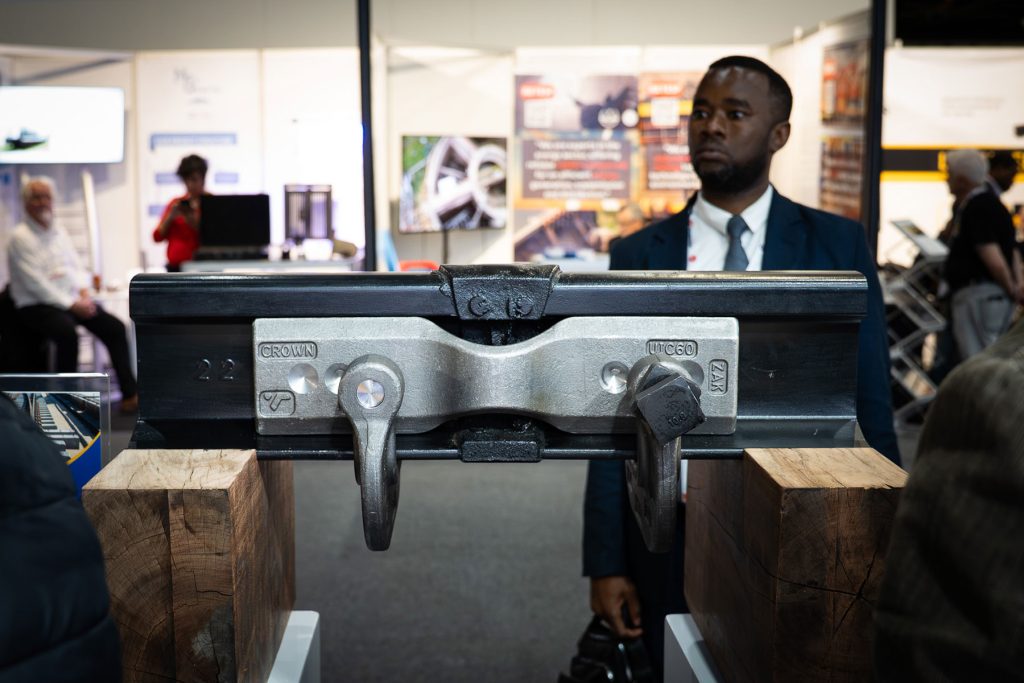
Zak, the rail products subsidiary of Clyde Industrial Corporation (Pty) Ltd, (Clyde), has introduced a forged joggle fish plate with G-clamp, designed for use on continuous welded rail (CWR), providing additional safety and reliability for rail operations during and after thermite welds.

The joggle fish plate and G-clamps are a temporary fastening/supporting rail component, installed after the exothermic weld is completed, ensuring the weld remains secure while trains continue to operate. Once the weld has been ultrasonically tested and certified as intact, the plate is removed and reused. On certain heavy-haul lines, including South Africa’s Ore Line, joggle fish plates remain in place permanently due to the need for additional confidence in weld integrity.

Forged for Strength and Reliability

Zak’s joggle fish plates and G-clamps are forged from C45 and C40 steel in line with Transnet specifications. Forging, unlike casting, ensures a stronger product by refining the grain structure during the heating and cooling process. Forged products also eliminate common casting flaws such as surface risers caused by sand moulds.

“When cast joggle fish plates are installed, uneven high spots prevent a proper seat against the rail. As trains pass, grinding occurs, loosening the fastening and requiring repeated maintenance,” explained Pieter Swart, Engineering Technician at Zak. “Our forged plates, with machined holes and smooth bearing areas, ensure a precise fit and long-lasting rigidity.”

Design Advantages

The joggle fish plate incorporates several design features:

  • Symmetrical fit – the joggle fish plate can be installed either way up, simplifying application in track.
  • Extended bolt threads – allowing easier fitting, clamping and improved ergonomics for welders and perway labour.
  • Chamfered edges – preventing wheel flange contact in areas where high rail wear occurs, improving safety.
  • Compatibility – designed specifically for UIC 60 and 60E1 rail profiles used on heavy-haul lines.

Orders and Supply

Zak recently secured an order from Transnet for the Ore Line for 6,000 joggle fish plates and 7,500 G-Clamps, with 2,400 units of each already delivered and the remainder scheduled for completion by the end of November.

“This product represents a benchmark for Transnet,” added Swart. “It has already positioned Zak as a registered vendor and reflects our commitment to delivering solutions that improve safety and efficiency in the rail sector.”
Print

Magazine Section

Africa Update

Instructions