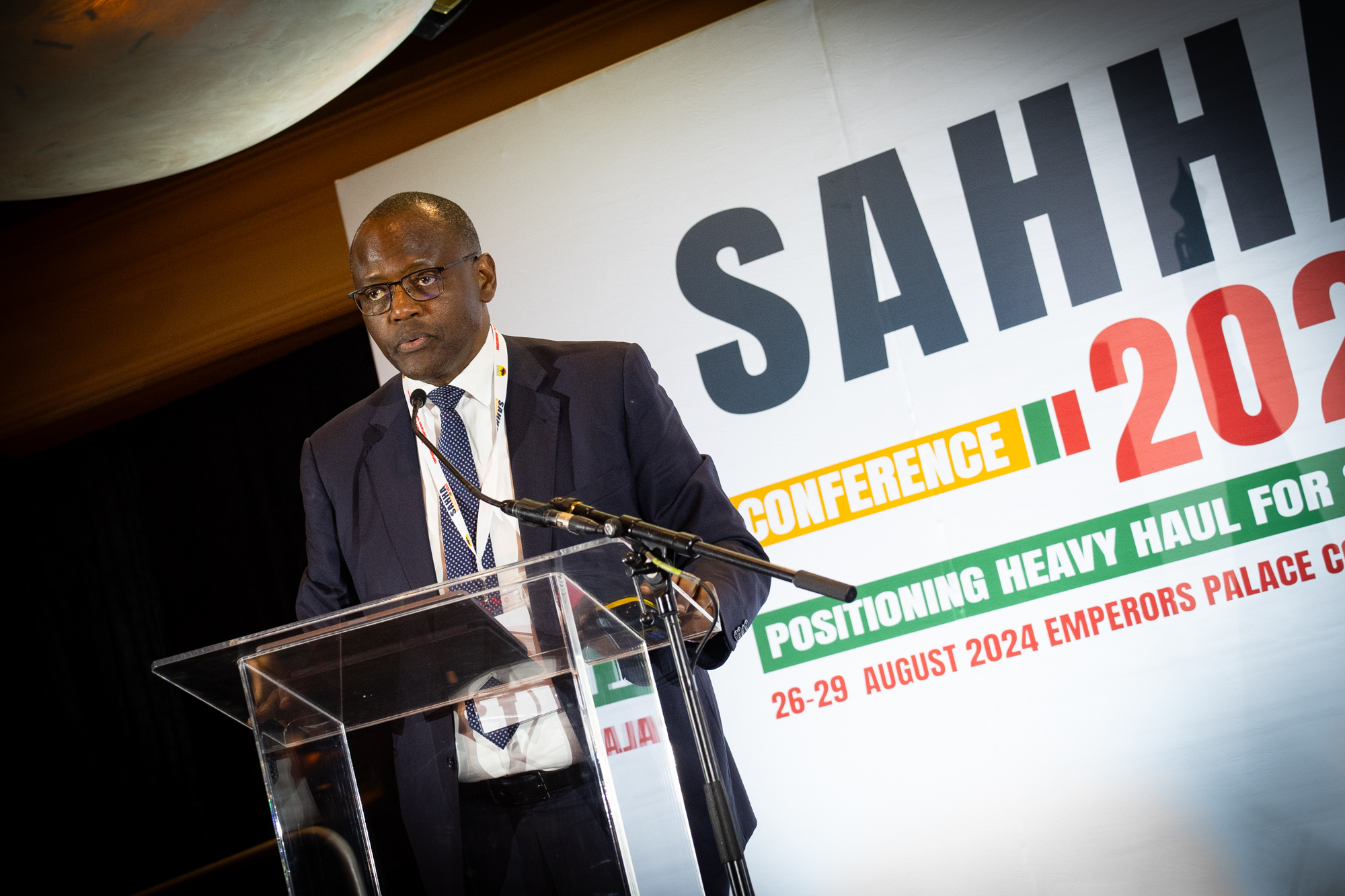
Transnet’s Path to Recovery – Strategic Reforms and Operational Enhancements Outlined at the 2024 SAHHA Conference
At the 2024 South African Heavy Haul Association (SAHHA) Conference, Mr Andile Hesperus Sangqu, Chairperson of Transnet, outlined the company’s strategic priorities and the critical challenges it faces.
Opening his remarks, Mr Sangqu emphasised the significance of the SAHHA platform as an invaluable opportunity for engagement with a broad range of stakeholders, including heavy haul customers, policymakers, financial institutions, civil societies, suppliers, research institutions, and the broader business community. He stated, “Transnet regards the SAHHA platform as an opportunity to engage in the quest to transform our freight industry to be cost-effective, efficient, safe, affordable, and globally competitive. We come here with a view and an attitude that we do not have all the answers. We are here to learn, to listen, and to allow for cross-pollination of ideas and new suggestions.”
As the custodian of South Africa’s ports, rail, and pipeline infrastructure, Transnet plays a pivotal role in the economy by facilitating the movement of goods from production to consumption points, thereby enabling trade and connecting domestic and export markets. “A well-functioning logistics chain is the backbone of sustainable economic growth,” Mr Sangqu stated. He emphasised the importance of having a well-functioning logistics infrastructure, including the rail network, ports, and pipelines, to support the economy’s efficient operation.
Mr Sangqu candidly addressed the historical challenges facing Transnet, noting that these issues did not arise overnight and have been exacerbated by years of underinvestment in infrastructure, as well as theft and vandalism. These factors have led to declining volumes and revenues, which in turn have hampered Transnet’s ability to fully support key supply chains and the broader South African economy.
To address these challenges, the Transnet Board of Directors approved the implementation of a recovery plan in October 2023. This plan is underpinned by key initiatives focused on improving operational efficiencies, enhancing cash flows and financial performance, collaborating with customers, implementing policy reforms, and rehabilitating infrastructure. “The recovery plan focuses on two elements: operational reform recovery and policy reform implementation. We have a two-speed approach of driving these two strategic initiatives with equal momentum, vigour, and singular commitment,” Mr Sangqu explained.
One of the primary objectives of the recovery plan is to reduce and eliminate the backlog in rail and port infrastructure maintenance to restore these systems to their designed capacity. Transnet is prioritising the modernisation and upgrading of infrastructure to support additional rail and port capacity, all within a financially constrained environment characterised by a significant debt burden. Mr Sangqu highlighted that the security of the infrastructure is receiving focused attention, with active steps being taken to improve the efficiency of operations and ensure safety. “Our customers are deservedly demanding and expecting better, reliable, dependable, affordable, and efficient rail and port services. Trains need to leave on time and must arrive on time safely,” he said.
Mr Sangqu reported that Transnet is already seeing positive signs of recovery, noting that since the launch of the recovery plan, the company has moved an additional 10 million tonnes. He acknowledged that more needs to be done and highlighted steps being taken to ensure increased availability and reliability of rolling stock, which is critical for improving service reliability.
Transnet is placing a dedicated focus on expediting the return to service of long-standing locomotives as part of the Transnet Freight Rail’s Rolling Stock Revival Programme. Mr Sangqu stated, “The executive leadership is busy finalising the approval process to appoint an alternative original equipment manufacturer (OEM) for its 20E, 21E, and 22E class rolling stock fleet. Phase one will see the return to service of approximately 48 locomotives over the next 18 months.” This initiative is expected to significantly improve rail equipment availability and reliability. The CRRC issue remains unresolved and a legal process is currently underway.
On the port side, Transnet Port Terminals is making significant strides in improving operational efficiency through the acquisition of new equipment across its terminals. In the coming months, TPT will take delivery of critical equipment, including rubber-tired gantry cranes, empty container handlers, straddle carriers, and ship-to-shore cranes. These acquisitions are aimed at bolstering the operational capabilities of South Africa’s ports and are seen as vital to sustaining the momentum of Transnet’s recovery efforts.
Despite the progress made, Mr Sangqu acknowledged that significant challenges remain. The unresolved matters related to the CRRC are ongoing, and legal processes to find a resolution are lengthy. Moreover, the structure of Transnet’s balance sheet and the high cost of debt continue to pose a major threat to the recovery plan. “Most of the additional cash flows that are currently being generated and made available through the recovery plan go towards paying for debt service costs. Work on the balance sheet optimisation is currently underway, aimed at assisting us to resolve this challenge,” he explained.
The second aspect of Transnet’s recovery strategy involves a strategic shift towards accelerated reforms and increased private sector participation in the freight logistics sector. This aligns with recent policy changes, including the National Rail Policy, Freight Logistics Roadmap, and Private Sector Participation Framework, which aim to modernise South Africa’s freight logistics infrastructure, boost competition, attract new investment, and drive sustainable growth.
He further noted the importance of developing a suite of policy reform options, saying, “There is no one-size-fits-all solution. Each reform policy outcome must be relevant and applicable to each of the requirements of the business segment.” Mr Sangqu stressed the need for consensus, balancing the interests of all stakeholders, including the government, private sector, and trade unions. He added, “We also need to have a rail network that is safe, reliable, and in a steady state, enabling the private sector to operate safely, reliably and efficiently.”
Transnet has prioritised the repair and restoration of the rail network, recognising it as essential for ensuring safe and reliable access. Addressing this backlog is urgent, and finalising discussions along with securing financial commitments are key steps in funding these critical repairs. Transnet remains dedicated to collaborating with key stakeholders to identify and implement solutions, leveraging the expertise and resources offered by the National Logistics Crisis Committee (NLCC). The NLCC’s comprehensive approach to tackling the country’s logistics challenges has established a supportive environment for driving efficiency and competitiveness.
However, a significant hurdle remains in the form of Transnet’s current balance sheet structure and the high cost of debt, which pose major challenges to the recovery plan. A substantial portion of the additional cash flows generated through the recovery initiatives is being utilised to service debt costs, prompting ongoing work on balance sheet optimisation to address this issue.
While Transnet recognises the urgency of these turnaround efforts, there is also an appreciation of the sector’s complexities, particularly given the lengthy lead times required for acquiring key equipment and components. Despite these challenges, both management and the board are firmly focused on improving operations. As Transnet progresses with the delivery of additional rolling stock in the coming months, there is an expectation of achieving more sustainable operational improvements.