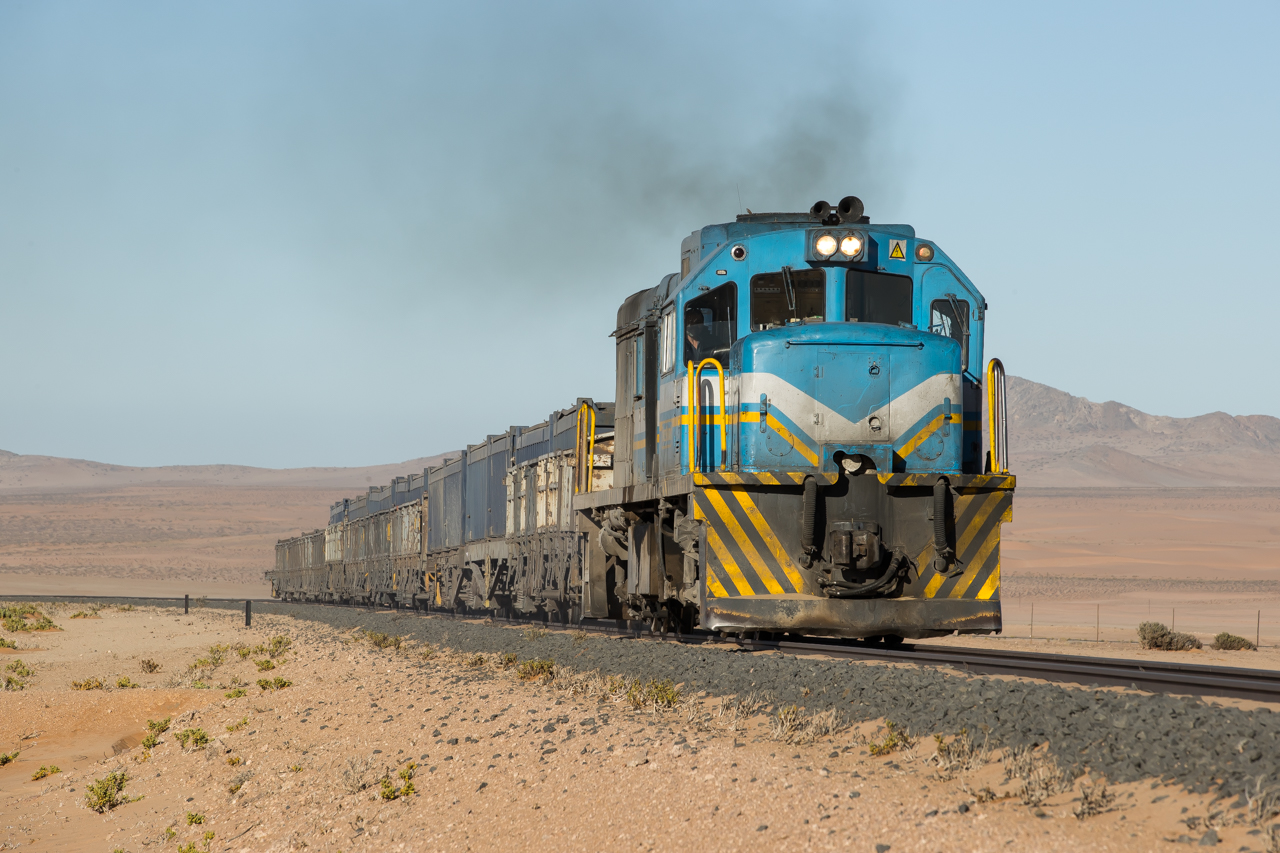
Transnamib Close to Concluding N$2.6 Billion Loan Deal
TransNamib Holdings, Namibia’s national rail services operator is in the final stages of securing a loan agreement amounting to N$2.6 billion it signed with the Development Bank of Namibia and the Development Bank of Southern Africa in March last year.
Communications manager, Abigail Raubenheimer said the funds from the loan will be allocated for several purposes, including the remanufacturing of rolling stock, the acquisition of new rolling stock, procurement of spare parts, modernising the TransNamib Workshop and the upgrading of signaling equipment.
Raubenheimer, said the company is currently in the last phases of planning and preparation to meet the conditions of the loan.
“Several conditions need to be met by TransNamib in order to gain access to the funding.”
Raubenheimer said the company is remaining committed to future objectives as TransNamib recognises the pivotal role of rail transport in positioning Namibia as a logistics hub, particularly due to its unparalleled capacity for bulk cargo handling.
She said TransNamib is diligently enhancing operational efficiencies and working towards expanding its capacity. This is aimed at establishing TransNamib as the preferred bulk transporter in Namibia. The planned multi billion loan facility from DBSA/DBN is expected to play a significant role in achieving this goal.
Raubenheimer said the next two years were crucial for the execution of TransNamib’s turnaround strategy. This period will see the implementation of plans to enhance capacity. The Integrated Strategic Business Plan for the next five years (2024-2029), which addresses the challenges and tactical measures required for sustainability, is also in advanced stages of approval.
TransNamib is planning to double its daily revenue target and needs to reach approximately N$2.8 million per day, she said.
The company has already announced that it plans to double the transportation of manganese to the port of Lüderitz from the current 15 000 tonnes to 30 000 tonnes. The manganese comes from the Northern Cape in South Africa for export via Lüderitz.
This development follows the reviving of the Aus to Lüderitz railway line after 20 years of dormancy. It is currently moving about 15 000 tonnes of manganese per month between Ariamsvlei and Lüderitz.
In terms of labour relations, Raubenheimer denied media reports that TransNamib was considering workforce reductions. She said these claims are false and originated from inaccurate reports by a media outlet.
Commenting on the company’s financial status, Raubenheimer said reflecting on the company’s financial challenges over recent years, she acknowledged that the company needs to improve its current situation, increase revenue generation and have reliable rolling stock.
“After years of advocacy, we have at last secured funding through DBSA and DBN. Progress is evident on the horizon as we move ahead.”
TransNamib is facing the challenge of using old locomotives that are over 50 years old and suffered a number of derailments because of old locomotives and old rail trucks.
In the 2023/24 budget presented by Minister of Finance and Public Enterprises, Iipumbu Shiimi said in recognition of the importance of railway infrastructure to facilitate economic activities, and especially support of Namibia’s logistics hub aspirations, the government together with TransNamib decided to obtain the financing facility with the Development Bank of Southern Africa and the Development Bank of Namibia.
Shiimi also said the government has already completed the upgrading of the Walvis Bay – Kranzberg railway line and further plans to raise money from the Africa Development Bank (AfDB) to secure funding for upgrading the Kranzberg-Tsumeb-Grootfontein section of the railway line.
The government has also completed a feasibility study for the extension of the railway network from Grootfontein to Katima Mulilo on the border with Botswana and Zambia. Engagements in this regard have commenced to map out the implementation modalities, Shiimi said.