Week: 2025-47Print Edition:Edit Article
  • 10. Completed
Item 1

Tomorrow’s Railway Safety: Combining People and Technology

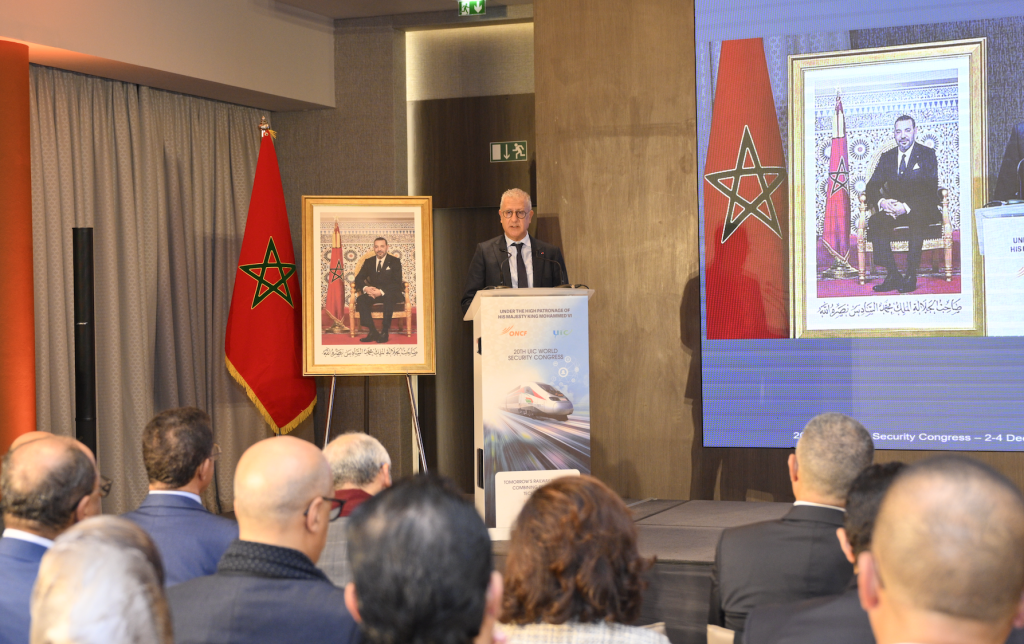
The International Union of Railways (UIC) and the National Railway Office (ONCF) jointly organised the 20th edition of the World Railway Safety Congress, held in Rabat from 2 to 4 December 2025.

The event, held under the High Patronage of His Majesty King Mohammed VI, brought together more than 250 participants from 30 countries, including representatives of railway operators, infrastructure managers, technology providers and public institutions.

The central theme of the Congress was: “Tomorrow’s railway safety: combining people and technology.”

The Congress provided an international platform for exchange and reflection, enabling the sharing of knowledge, the presentation of innovative solutions and discussion on railway safety strategies combining human expertise with advanced technologies such as digitalisation, artificial intelligence and integrated monitoring systems.

An exhibition area allowed industry players to showcase their latest innovations and solutions, offering a practical overview of development prospects and applications for railway safety.

Mr Abdessamad Kayouh, Minister of Transport and Logistics, stated that the commitment to railway safety forms part of a comprehensive vision for the security and protection of people, property and infrastructure. He said this commitment is reflected in the modernisation of monitoring and control systems, the strengthening of human capital through training and skills development, and the establishment of specialised structures dedicated to safety and operational coordination, all within a governance framework aligned with international standards to ensure reliable, resilient and accessible rail transport.

Mohamed Rabie Khlie, Director General of ONCF, highlighted the strategic dimension of security, noting that it has become a major lever for railway development. He said it contributes to strengthening passenger confidence, encouraging innovation and consolidating infrastructure resilience, emphasising the importance of anticipating risks, protecting people and property, and supporting the sustainable transformation of rail transport in Morocco and across Africa.

Dr Alan Beroud, President of the UIC, stated that safety has always been a cornerstone of railway operations, and is now even more critical in a global context of increasing tensions and threats such as terrorism, sabotage and cyberattacks. He said the mission to protect people, infrastructure and data remains essential, as railways serve as both the backbone of mobility and symbols of stability and cooperation.

François Davenne, Director General of the UIC, emphasised that safety is not only an operational imperative but also a driver of transformation, investment and trust, reinforcing rail’s role as the backbone of sustainable mobility.

Xavier Roche (SNCF), President of the UIC Security Platform, added that innovation and international cooperation are essential to anticipate threats and guarantee the safety of passengers and infrastructure.

Major institutional partners, including the DGSN, ANP and ONDA, expressed their support for strengthening railway security within the framework of intermodal development, noting that cooperation between port, airport, railway and security authorities is essential to protect users and facilities.

The Congress programme was structured around four main themes:
• New governance and challenges of railway safety: analysis of current and emerging threats, and sharing of experiences on risk prevention and management.
• Innovation, digitalisation and artificial intelligence in the service of security: exploration of technological tools aimed at increasing intervention effectiveness and preventing incidents.
• International cooperation and partnerships: highlighting collaborative initiatives between operators, institutions and public authorities to harmonise practices and strengthen global rail network resilience.
• Safety of high-speed lines: human, technological and organisational aspects, including case studies, feedback and recommendations to protect users, staff and infrastructure.

Key takeaways from the Congress included:
• The need for an integrated approach combining human expertise and technology for an effective and sustainable security strategy.
• Recognition of the work of the UIC Security Platform and specialised working groups, underscoring the importance of research and continuous innovation.
• A proposal to create an African Security Group to establish a regional platform for consultation, best-practice exchange and technical cooperation between African railway companies.
• Emphasis on training and professionalism, with a call for joint programmes and shared educational resources to strengthen team capabilities.
• Adoption of a coordinated approach to managing major events, involving railway operators, public authorities and institutional partners to anticipate risks and ensure the safety of users, staff and infrastructure.

These strategic directions were reinforced by the commitment of partners. The UIC and ONCF expressed their gratitude to sponsors whose support contributed to the success of the event: Huawei, Honeywell, SITE SpA, Maghrebnet, Bosch Security Systems BV, ICF-Imngeniería y Control Ferroviario, ALOMRA, DDM, Neweracom and CID.

In conclusion, the 20th World Rail Safety Congress reaffirmed participants’ commitment to strengthening international cooperation, promoting sustainable partnerships and developing coordinated initiatives to secure the global rail network. The event contributed to consolidating collective momentum needed to anticipate risks, improve operational performance and support innovation in the rail sector.
Item 2

Contributor:

Tomorrow’s Railway Safety: Combining People and Technology

The International Union of Railways (UIC) and the National Railway Office (ONCF) jointly organised the 20th edition of the World Railway Safety Congress, held in Rabat from 2 to 4 December 2025.

The event, held under the High Patronage of His Majesty King Mohammed VI, brought together more than 250 participants from 30 countries, including representatives of railway operators, infrastructure managers, technology providers and public institutions.

The central theme of the Congress was: “Tomorrow’s railway safety: combining people and technology.”

The Congress provided an international platform for exchange and reflection, enabling the sharing of knowledge, the presentation of innovative solutions and discussion on railway safety strategies combining human expertise with advanced technologies such as digitalisation, artificial intelligence and integrated monitoring systems.

An exhibition area allowed industry players to showcase their latest innovations and solutions, offering a practical overview of development prospects and applications for railway safety.

Mr Abdessamad Kayouh, Minister of Transport and Logistics, stated that the commitment to railway safety forms part of a comprehensive vision for the security and protection of people, property and infrastructure. He said this commitment is reflected in the modernisation of monitoring and control systems, the strengthening of human capital through training and skills development, and the establishment of specialised structures dedicated to safety and operational coordination, all within a governance framework aligned with international standards to ensure reliable, resilient and accessible rail transport.

Mohamed Rabie Khlie, Director General of ONCF, highlighted the strategic dimension of security, noting that it has become a major lever for railway development. He said it contributes to strengthening passenger confidence, encouraging innovation and consolidating infrastructure resilience, emphasising the importance of anticipating risks, protecting people and property, and supporting the sustainable transformation of rail transport in Morocco and across Africa.

Dr Alan Beroud, President of the UIC, stated that safety has always been a cornerstone of railway operations, and is now even more critical in a global context of increasing tensions and threats such as terrorism, sabotage and cyberattacks. He said the mission to protect people, infrastructure and data remains essential, as railways serve as both the backbone of mobility and symbols of stability and cooperation.

François Davenne, Director General of the UIC, emphasised that safety is not only an operational imperative but also a driver of transformation, investment and trust, reinforcing rail’s role as the backbone of sustainable mobility.

Xavier Roche (SNCF), President of the UIC Security Platform, added that innovation and international cooperation are essential to anticipate threats and guarantee the safety of passengers and infrastructure.

Major institutional partners, including the DGSN, ANP and ONDA, expressed their support for strengthening railway security within the framework of intermodal development, noting that cooperation between port, airport, railway and security authorities is essential to protect users and facilities.

The Congress programme was structured around four main themes:
• New governance and challenges of railway safety: analysis of current and emerging threats, and sharing of experiences on risk prevention and management.
• Innovation, digitalisation and artificial intelligence in the service of security: exploration of technological tools aimed at increasing intervention effectiveness and preventing incidents.
• International cooperation and partnerships: highlighting collaborative initiatives between operators, institutions and public authorities to harmonise practices and strengthen global rail network resilience.
• Safety of high-speed lines: human, technological and organisational aspects, including case studies, feedback and recommendations to protect users, staff and infrastructure.

Key takeaways from the Congress included:
• The need for an integrated approach combining human expertise and technology for an effective and sustainable security strategy.
• Recognition of the work of the UIC Security Platform and specialised working groups, underscoring the importance of research and continuous innovation.
• A proposal to create an African Security Group to establish a regional platform for consultation, best-practice exchange and technical cooperation between African railway companies.
• Emphasis on training and professionalism, with a call for joint programmes and shared educational resources to strengthen team capabilities.
• Adoption of a coordinated approach to managing major events, involving railway operators, public authorities and institutional partners to anticipate risks and ensure the safety of users, staff and infrastructure.

These strategic directions were reinforced by the commitment of partners. The UIC and ONCF expressed their gratitude to sponsors whose support contributed to the success of the event: Huawei, Honeywell, SITE SpA, Maghrebnet, Bosch Security Systems BV, ICF-Imngeniería y Control Ferroviario, ALOMRA, DDM, Neweracom and CID.

In conclusion, the 20th World Rail Safety Congress reaffirmed participants’ commitment to strengthening international cooperation, promoting sustainable partnerships and developing coordinated initiatives to secure the global rail network. The event contributed to consolidating collective momentum needed to anticipate risks, improve operational performance and support innovation in the rail sector.

Web

Content Visibility:

SEO Title
Tomorrow’s Railway Safety: People and Technology at the Centre of the 20th World Railway Safety Congress
SEO Description
The 20th World Railway Safety Congress in Rabat brought together global rail operators, regulators and technology leaders to discuss safety strategies integrating human expertise with digitalisation, AI and advanced monitoring systems.
SEO Keywords


SEO Keyphrase
  • International
  • Railway Safety
  • All Africa
Item 2

TAG UIC please

https://www.railwaysafrica.com/news/tomorrows-railway-safety-combining-people-and-technology

The World Railway Safety Congress in Rabat brought together 250 participants from 30 countries to explore how people and technology combine to shape tomorrow’s rail safety.

Key themes included governance, AI, digitalisation, intermodal security and the safety of high-speed lines.

Read more here:

#RailSafety #UIC #ONCF #RailTechnology #Digitalisation #AI #SustainableMobility #RailSecurity #Infrastructure #RailIndustry #GlobalRail #RailSafety

Item 2

Contributor:

Tomorrow’s Railway Safety: Combining People and Technology

The International Union of Railways (UIC) and the National Railway Office (ONCF) jointly organised the 20th edition of the World Railway Safety Congress, held in Rabat from 2 to 4 December 2025.

The event, held under the High Patronage of His Majesty King Mohammed VI, brought together more than 250 participants from 30 countries, including representatives of railway operators, infrastructure managers, technology providers and public institutions.

The central theme of the Congress was: “Tomorrow’s railway safety: combining people and technology.”

The Congress provided an international platform for exchange and reflection, enabling the sharing of knowledge, the presentation of innovative solutions and discussion on railway safety strategies combining human expertise with advanced technologies such as digitalisation, artificial intelligence and integrated monitoring systems.

An exhibition area allowed industry players to showcase their latest innovations and solutions, offering a practical overview of development prospects and applications for railway safety.

Mr Abdessamad Kayouh, Minister of Transport and Logistics, stated that the commitment to railway safety forms part of a comprehensive vision for the security and protection of people, property and infrastructure. He said this commitment is reflected in the modernisation of monitoring and control systems, the strengthening of human capital through training and skills development, and the establishment of specialised structures dedicated to safety and operational coordination, all within a governance framework aligned with international standards to ensure reliable, resilient and accessible rail transport.

Mohamed Rabie Khlie, Director General of ONCF, highlighted the strategic dimension of security, noting that it has become a major lever for railway development. He said it contributes to strengthening passenger confidence, encouraging innovation and consolidating infrastructure resilience, emphasising the importance of anticipating risks, protecting people and property, and supporting the sustainable transformation of rail transport in Morocco and across Africa.

Dr Alan Beroud, President of the UIC, stated that safety has always been a cornerstone of railway operations, and is now even more critical in a global context of increasing tensions and threats such as terrorism, sabotage and cyberattacks. He said the mission to protect people, infrastructure and data remains essential, as railways serve as both the backbone of mobility and symbols of stability and cooperation.

François Davenne, Director General of the UIC, emphasised that safety is not only an operational imperative but also a driver of transformation, investment and trust, reinforcing rail’s role as the backbone of sustainable mobility.

Xavier Roche (SNCF), President of the UIC Security Platform, added that innovation and international cooperation are essential to anticipate threats and guarantee the safety of passengers and infrastructure.

Major institutional partners, including the DGSN, ANP and ONDA, expressed their support for strengthening railway security within the framework of intermodal development, noting that cooperation between port, airport, railway and security authorities is essential to protect users and facilities.

The Congress programme was structured around four main themes:
• New governance and challenges of railway safety: analysis of current and emerging threats, and sharing of experiences on risk prevention and management.
• Innovation, digitalisation and artificial intelligence in the service of security: exploration of technological tools aimed at increasing intervention effectiveness and preventing incidents.
• International cooperation and partnerships: highlighting collaborative initiatives between operators, institutions and public authorities to harmonise practices and strengthen global rail network resilience.
• Safety of high-speed lines: human, technological and organisational aspects, including case studies, feedback and recommendations to protect users, staff and infrastructure.

Key takeaways from the Congress included:
• The need for an integrated approach combining human expertise and technology for an effective and sustainable security strategy.
• Recognition of the work of the UIC Security Platform and specialised working groups, underscoring the importance of research and continuous innovation.
• A proposal to create an African Security Group to establish a regional platform for consultation, best-practice exchange and technical cooperation between African railway companies.
• Emphasis on training and professionalism, with a call for joint programmes and shared educational resources to strengthen team capabilities.
• Adoption of a coordinated approach to managing major events, involving railway operators, public authorities and institutional partners to anticipate risks and ensure the safety of users, staff and infrastructure.

These strategic directions were reinforced by the commitment of partners. The UIC and ONCF expressed their gratitude to sponsors whose support contributed to the success of the event: Huawei, Honeywell, SITE SpA, Maghrebnet, Bosch Security Systems BV, ICF-Imngeniería y Control Ferroviario, ALOMRA, DDM, Neweracom and CID.

In conclusion, the 20th World Rail Safety Congress reaffirmed participants’ commitment to strengthening international cooperation, promoting sustainable partnerships and developing coordinated initiatives to secure the global rail network. The event contributed to consolidating collective momentum needed to anticipate risks, improve operational performance and support innovation in the rail sector.

Print

Magazine Section

Africa Update

Instructions

Photo Credit: ONCF