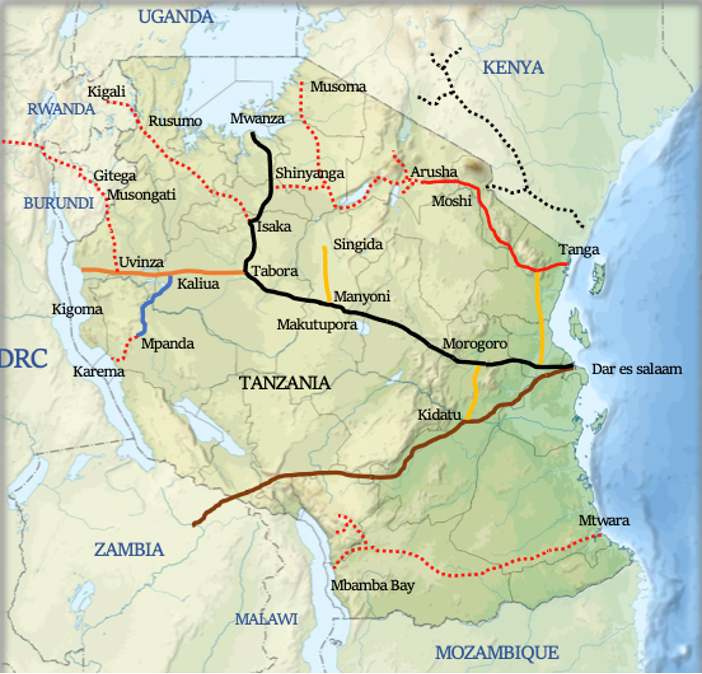
- Original
- Website
- Social Media
Item 1
Item 2
Contributor:
Item 2
Item 2
Contributor:
The Director General of Tanzania Railways Corporation, Masanja Kadogosa, provided an update to the participants regarding the African Integrated High-Speed Railway Network (AIHSRN). He highlighted that, in alignment with the Agenda, Tanzania has commenced the implementation of its Standard Gauge Railway (SGR) flagship project.
The implementation of the railway infrastructure development plan is a strategic move in alignment with the African Union’s Agenda 2063, signifying a commitment to enhancing Africa’s transport network and economic integration. This plan involves several key initiatives:
- Multi-national Collaboration: There’s a concerted effort to foster multinational collaboration in railway infrastructure development. This enhances interoperability across land-linked countries, contributing significantly to the African Integrated High-Speed Railway Network (AIHSRN), which aims to connect the continent more efficiently.
- Environmental and Social Safeguards: The development of railway infrastructure is undertaken with a strong commitment to environmental and social safeguards, ensuring that projects are sustainable and beneficial to the communities they impact.
- Legislative Revisions: The revision of the Railway Act to permit Open-Access Operations is a strategic move to enhance collaborations and transform economies by allowing different railway operators to use the same railway infrastructure, promoting efficiency and competition.
- Alternative Funding: Adapting to alternative funding mechanisms involves leveraging resources from Continental Financial and Monetary Institutions, promoting sustainable project financing and benefiting from pan-African financial integration.
The government’s commitment to investing in infrastructure, including railways, is evident, with investments surpassing USD 10.016 billion (TZS 23.3 trillion). These projects are not only financially and economically viable but also pivotal in promoting sustainable mobility across the corridors. They aim to connect with the East African Community (EAC), Southern African Development Community (SADC), and Common Market for Eastern and Southern Africa (COMESA) countries, enhancing regional connectivity.
Moreover, the potential off-takers, including the untapped mineral and agricultural sectors, highlight the strategic importance of these projects in unlocking economic reserves. Additionally, providing alternative routes for land-linked countries such as DRC, Burundi, Rwanda, Uganda, Mozambique, Zambia, and Malawi, underscores the role of these railway developments in facilitating trade, enhancing mobility, and fostering economic growth across the continent.
“We have that moral obligation to make sure that our neighbours can easily access the Indian Ocean. We are also part of east Africa and part of SADC, which really means investing in Tanzania or any development of infrastructure in Tanzania, will also help development for these countries.”
DIRECTOR GENERAL OF TANZANIA RAILWAYS CORPORATION, MR MASANJA K. KADOGOSA.
To date, the development has achieved 50% completion of the planned SGR network within the country.
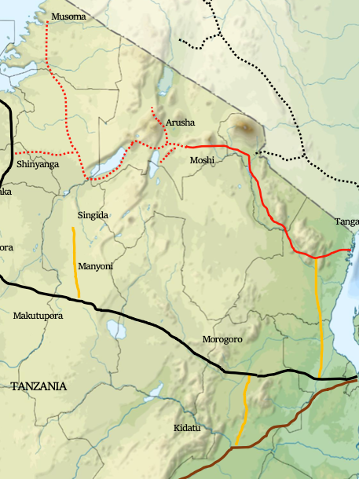
The Tanzania SGR Railway Network comprises three main corridors:
- Central Corridor
- Northern Corridor
- Southern Corridor
Tanzania has initiated the construction of the SGR, with:
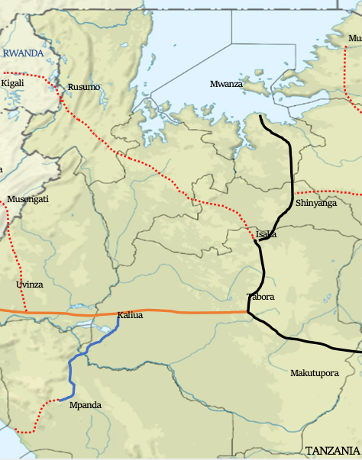
- Phase I: Dar es Salaam to Mwanza along the Central Corridor, covering a total of 1,596km, which includes 1,219km of mainline and 377km of sidings.
- Phase II: Tabora to Kigoma, spanning 506km (411km of mainline and 95km of sidings), and Uvinza to Musongati, extending over 280km, with 180km located within Tanzania.
The Central Corridor serves as a vital link to landlocked countries, including Uganda, Rwanda, Burundi, and the Democratic Republic of Congo.
Tanzania, situated in East Africa’s Great Lakes region, spans 947,303 sq. km, and had a population of 61,741,120 according to the 2022 Census. The country is strategically positioned to serve the East African Community (EAC), Southern African Development Community (SADC), and Common Market for Eastern and Southern Africa (COMESA) regions, collectively home to 795 million people or 57% of Africa’s population. This makes Tanzania a significant gateway to Eastern Africa and the SADC countries, offering vast market opportunities. Tanzania Railways Corporation (TRC) is a state corporation established under The Railway Act No. 10 of 2017
In respect of progress:
Lot 1 of the SGR project, stretching from Dar es Salaam to Morogoro, encompasses a track length of 300km, of which 205km is the mainline and 95km consists of sidings. This section includes six stations: Dar Es Salaam, Pugu, Soga, Ruvu, Ngerengere, and Morogoro, enhancing the rail network’s connectivity. Additionally, it features marshalling yard and workshops located in Kwala (Coast), further supporting the railway’s operations. The project, contracted to Yapi Merkezi and Mota-Engil under a FIDIC Plant and Design-Build Contract (Yellow Book), is nearing completion with an overall progress of 98.73% as of November 2023. The expected completion date for this critical infrastructure development is set for 16 June 2024, marking a significant milestone in enhancing Tanzania’s transportation landscape.
Lot 2, which extends from Morogoro to Makutupora, features a railway track with a total length of 422km, comprising 336km of mainline and 86km of sidings. This segment is set to include eight stations: Mkata, Kilosa, Kidete, Gulwe, Igandu, Dodoma, Bahi, and Makutupora, significantly enhancing the region’s rail connectivity. The project also includes a marshalling yard and workshops situated in Ihumwa (Dodoma), crucial for the railway’s operational efficiency. The construction, undertaken by Yapi Merkezi, is governed by a FIDIC Plant and Design-Build Contract (Yellow Book), ensuring international standards in the project’s execution. As of November 2023, the overall progress has reached 96.01%, with the anticipated completion date scheduled for 15 January 2024.
Lot 3 of the project, connecting Makutupora to Tabora, is in progress with a total track length of 368km, which includes 294km of mainline and 74km of sidings. This section will feature seven stations: Manyoni, Itigi, Tura, Malongwe, Goweko, Igalula, and Tabora, enhancing the railway network within the region. Unlike the previous lots, no marshalling yard and workshops have been specified for this segment.
The construction is being carried out by Yapi Merkezi, adhering to the standards of a FIDIC Plant and Design-Build Contract (Yellow Book), which is a testament to the project’s commitment to quality and efficiency. As of November 2023, the project has achieved an overall progress of 13.19%, with an expected completion date set for 7 December 2026.
Lot 4, the Tabora to Isaka stretch, is currently underway with a track comprising 165 km in total, split into 130 km of mainline and 35km of sidings. This segment will host three stations: Nzubuka, Ipala, and Bukene, aiming to bolster the rail network’s accessibility and functionality in the area. Additionally, it features a marshalling yard and workshops located in Tabora, which are essential for the railway’s maintenance and operational efficiency.
The project’s construction is being managed by Yapi Merkezi, employing a FIDIC Plant and Design-Build Contract (Yellow Book) to ensure adherence to international quality and performance standards. As of November 2023, the project has reached an overall progress of 5.30%, with activities currently at the mobilization and design stage. The anticipated completion date for this critical infrastructure development is set for 13 March 2026.
Lot 5, spanning from Isaka to Mwanza, features a railway line totalling 341km, with 249km allocated to the mainline and 92km to sidings. This segment is set to establish ten stations: Isaka, Luhumbo, Shinyanga, Seke, Malampaka, Bukwimba, Malya, Mantare, Fela, and Mwanza Central, significantly expanding the rail network’s reach and facilitating access across the region. Additionally, it includes a marshalling yard and workshops in Fela (Mwanza), which are crucial for the operational support of the railway system.
The construction is being executed by CCECC & CRCC, guided by the principles of a FIDIC Plant and Design-Build Contract (Yellow Book), ensuring the project meets international standards of quality and efficiency. As of November 2023, the project has achieved 47.47% completion, with an expected finish date of 14 May 2024.
Phase 2: Lot 1, which covers the stretch from Tabora to Kigoma, is in the early stages of development with a total track length of 506km, consisting of 411km of mainline and 95 km of sidings. Currently, the project is at the design stage, planning for ten stations along this route, indicative of a significant expansion and enhancement of the rail network’s capacity and reach within the region. The inclusion of marshalling yards and workshops in Katosho and Uvinza (Kigoma) is essential for the operational efficiency and maintenance of the railway system.
The construction of this segment is being undertaken by CCECC & CRCC, utilizing a FIDIC Plant and Design-Build Contract (Yellow Book). This contractual framework ensures that the project aligns with international best practices in terms of quality, safety, and efficiency. As of November 2023, the project is at the mobilization and design stage, with an anticipated completion date set for 23 March 2027. This phase of the railway project is crucial for improving connectivity and facilitating economic development across Tanzania, particularly between Tabora and Kigoma.
Tanzania Standard Gauge Railway Design Parameters
The design parameters for the Standard Gauge Railway (SGR) adhere to international standards, incorporating specifications from both the American Railway Engineering and Maintenance of Way Association (AREMA) and the International Union of Railways (UIC – 60). Key features of the SGR design include:
Axle Load: The railway is designed to support an axle load of 35 tonnes, accommodating heavy freight movements in addition to passenger services.
Traction Power: The SGR is electrified, ensuring efficient and sustainable traction across the network.
Design Speed: The railway is designed for high-speed operations, with passenger trains capable of reaching speeds up to 160kph and freight services up to 120kph.
Signalization and Telecommunication: The SGR incorporates advanced signalization and telecommunication systems, including the European Rail Traffic Management System (ERTMS) – Level 2, the European Train Control System (ETCS), and GSM-R for secure and reliable communications.
Other Elements: To enhance safety and operational efficiency, the railway features grade-separated crossings and is fully fenced, minimizing potential disruptions and ensuring the safety of both rail operations and surrounding communities.
Regional Railway Projects Integrated with Tanzania’s Standard Gauge Railway
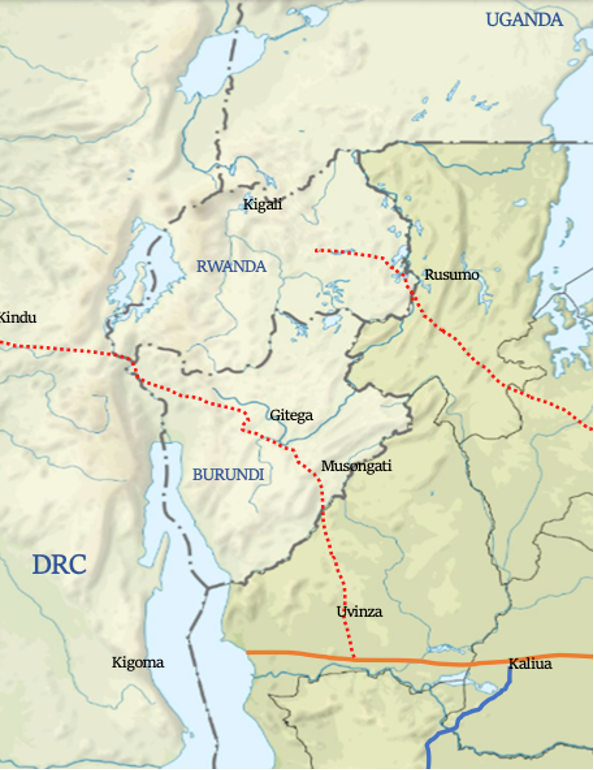
Uvinza – Musongati
The United Republic of Tanzania and the Republic of Burundi have embarked on a joint venture to enhance regional economic growth through the construction of a new railway line connecting Uvinza to Musongati. This initiative aims to forge a vital link for economic expansion within the regions it traverses.
The proposed railway line spans a total length of 280km along the mainline, with 180km located within Tanzania and the remaining 100km extending through Burundi. The process of selecting a contractor for the project is currently underway, reflecting the commitment of both nations to this significant infrastructure development.
Plans are also in place to extend this railway line to provide direct access to the Democratic Republic of Congo (DRC) via Kindu, a proposal that is currently under a feasibility study. This expansion underscores the strategic importance of the railway in enhancing regional connectivity and economic integration.
The objectives of the Uvinza-Musongati railway line are multifaceted and include:
- Providing efficient and affordable transport services to stimulate trade, regional economic integration, and the development of key sectors such as manufacturing and agriculture within the corridor.
- Developing a reliable, cost-effective, and seamless railway transport system that connects Burundi to the Indian Ocean coast, enhancing accessibility and economic opportunities.
- Improving the reliability of rail transport across the involved regions, thereby facilitating smoother and more efficient movement of goods and services.
- Unlocking the potential of untapped mining reserves by providing a critical infrastructure link, thereby encouraging investment and development in the mining sector.
- Offering an alternative and strategic transport route for the DRC, further broadening the economic impact and utility of the railway line across the region.
The Central Corridor Transit Transport Facilitation Agency (CCTTFA) has the project noted as: Uvinza – Musongati -Gitega -DRC Railway
Early 2023, The Governments of Tanzania and Burundi invited initial selections for the design and construction of Phase I of the Multinational Tanzania – Burundi – DRC Congo SGR Project. This phase focused on constructing the Tanzania/Burundi (Uvinza – Musongati – Gitega) SGR section under a Design and Build arrangement. Financed in part by the African Development Bank, the project covered approximately 282km of electrified standard gauge railway line.
The Invitation for Initial Selection Works (Design and Build) divided the project into two lots: Lot 1 covered the 156km Tanzania section from Uvinza to the Malagarasi border, and Lot 2 included the 126km Burundi section from Malagarasi to Musongati and Gitega, further divided into two packages.
- Lot 2-Package A: Malagarasi – Musongati (80km) Section.
- Lot 2- Package B: Musongati – Gitega (46km) Section
The Central Corridor Transit Transport Facilitation Agency (CCTTFA) has noted the project as: Uvinza – Musongati – Gitega – DRC Railway. In early 2023, the Governments of Tanzania and Burundi invited initial selections for the design and construction of Phase I of the Multinational Tanzania – Burundi – DRC Congo SGR Project. This phase focused on constructing the Tanzania/Burundi (Uvinza – Musongati – Gitega) SGR section under a Design and Build arrangement. Partly financed by the African Development Bank, the project covered approximately 282km of electrified standard gauge railway line.
The Invitation for Initial Selection Works (Design and Build) divided the project into two lots: Lot 1 covered the 156km Tanzania section from Uvinza to the Malagarasi border, and Lot 2 included the 126km Burundi section from Malagarasi to Musongati and Gitega, further divided into two packages:
- Lot 2-Package A: Malagarasi – Musongati (80km) Section.
- Lot 2- Package B: Musongati – Gitega (46km) Section.
The Tanzania Railways Corporation (TRC), in collaboration with ARTF (Burundi’s railway corporation), oversaw the procurement and implementation of this ambitious project, adhering to AREMA and UIC standards. The construction encompassed earthworks, structures, stations, and advanced railway systems, ensuring reliability, safety, and compliance with environmental and social safeguards. This multinational project represented a significant step towards regional development, promising to boost trade and economic growth across Tanzania, Burundi, and potentially extending to the DRC (https://www.afdb.org/sites/default/files/documents/project-related-procurement/spn_-invitation_for_initial_selection.pdf).
On 12 December, the African Development Bank announced that it had approved $696.41 million in financing for Burundi and Tanzania to build 650km of rail infrastructure to develop the Central Corridor network. The Bank Group’s financing is intended to construct 651km on the Tanzania-Burundi railway line, consisting of the development of a single electrified standard gauge track. This will be subdivided into three lots: Tabora – Kigoma (411km) and Uvinza – Malagarasi (156km) sections in Tanzania; and the Malagarasi –Musongati section (84km) in Burundi. This standard gauge railway project will be connected to the existing railway network of Tanzania, providing access to the port of Dar es Salaam. In total, 400km of rail infrastructure has already been built in Tanzania from Dar es Salaam to Dodoma since the start of the first phase of the project. The rest of the section from Dodoma to Tabora is under construction.
The Bank Group will provide $98.62 million to Burundi in the form of grants and $597.79 million to Tanzania in the form of loans and guarantees. As the Initial Mandate Lead Arranger (IMLA), the Bank will structure and mobilise financing of up to $3.2 billion from commercial banks, Development Financial Institutions (DFIs), Export Credit Agencies (ECAs) and institutional investors. The total cost of the project both in Tanzania and Burundi is estimated at nearly $3.93 billion.
This project is a priority for not only the East African Community (EAC) Rail Master Plan but also the African Union’s Program for Infrastructure Development in Africa (PIDA) and will facilitate economic and social transformation in both countries and in the region. The construction of this railway will allow Burundi to intensify the exploitation of nickel, of which the country has the 10th largest deposit in the world in the Musongati mining fields.
The project is aligned with the Bank’s Ten-Year Strategy and two of its operational priorities, the “High 5“, “Integrate Africa” and “Industrialize Africa“. It is also in line with the Regional Integration Strategy Paper of the Bank for East Africa (2023-2027) and the Bank’s Country Strategy Papers (CSPs) for Tanzania (2021-2025) and Burundi (2019-2023).
Readers may find the “(https://railwaysafricamagazine.b-cdn.net/Country%20Documents/Tanzania/toruvinzamusongati.pdf) Multinational Tanzania/Burundi Uvinza-Musongati Railway Project Study Terms of Reference for Transaction Advisory Services” document of interest.
This rail project is also noted as part of the approved projects for PIDA-PAP 2.
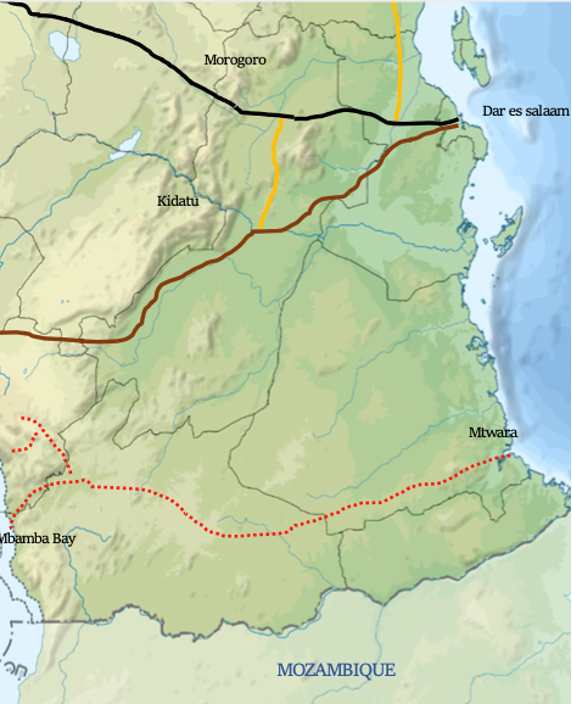
Mtwara – Mbamba Bay SGR Project with Spurs to Liganga and Mchuchuma
The construction of the Standard Gauge Railway (SGR) line from Mtwara to Mbamba Bay, with extensions to Liganga and Mchuchuma, is set to significantly propel the economic development of the Mtwara corridor in Southern Tanzania. This proposed railway line, spanning approximately 1,000km, aims to establish a sustainable and efficient transportation network in the region. Following the completion of a feasibility study and preliminary design, efforts to secure funding are currently underway, with the project’s infrastructure costs estimated at USD 5.9 billion.
The objectives of this ambitious project include:
- Promoting sustainable mobility within the Mtwara corridor by establishing a new railway line that connects Mtwara to Mbamba Bay, with spurs leading to Liganga and Mchuchuma. This development is expected to significantly enhance transportation efficiency in the region.
- Unlocking the untapped mineral and agricultural potential within Southern Tanzania, thereby contributing to the country’s economic growth and diversification.
- Developing a reliable, cost-effective, and seamless railway transport system that ensures efficient movement along the corridor, thereby improving logistic capabilities and accessibility.
- Providing an alternative transportation route for neighbouring countries such as Mozambique, Zambia, and Malawi, thus fostering regional integration and economic cooperation.
The South African Development Community (SADC) has highlighted the strategic importance of the new railway line, which is poised to enhance connectivity from Mtwara Port to key mineral sites in Tanzania. This line is set to connect Mtwara Port with the Liganga Iron Ore fields, situated approximately 874km west of the port. The Liganga fields are notable for their significant iron ore reserves, estimated to be between 200 and 2,000 million tonnes. Furthermore, this railway line will extend connectivity to the Mchuchuma coal fields, located around 946km from Mtwara Port, near Lake Nyasa in the southwestern part of the country. The Mchuchuma coal fields boast considerable coal reserves, with 159 million tonnes classified as proven and an additional 377 million tonnes inferred. This infrastructure development is expected to unlock the vast mineral potential of these areas, contributing substantially to the region’s economic growth.
This rail project is also noted as part of the approved projects for PIDA-PAP 2.
Isaka – Rusumo – Kigali
The United Republic of Tanzania and the Republic of Rwanda have set a strategic goal to construct a new railway line from Isaka to Kigali, aiming to foster the economic growth of the involved regions. This proposed railway, stretching a total of 495km, is designed to significantly improve the connectivity between these countries and other landlocked regions. With the feasibility study and preliminary design phases already completed, efforts to secure the necessary funding are currently underway.
The objectives of the Isaka to Kigali railway project are to:
- Enhance the economic development of the region by improving connectivity with land-linked countries, thereby facilitating easier access to international markets and boosting trade.
- Improve the reliability of rail transport across the regions, offering a more dependable alternative to road transport that is susceptible to weather conditions and logistical challenges.
- Stimulate the exploration and development of untapped mining reserves, which could lead to a surge in mining activities and contribute to the economic prosperity of the region.
- Reduce transportation costs significantly, making it cheaper to move goods and commodities between countries and to ports for export, thus enhancing the competitive edge of local industries on the global market.
TANGA – ARUSHA – MUSOMA
The Standard Gauge Railway (SGR) line, extending from Tanga to Musoma, is a pivotal infrastructure project set to enhance Tanzania’s transport network. Spanning approximately 1,028km, this railway will link the proposed new Port of Mwambani, located south of Tanga, directly to Lake Victoria, thereby facilitating a seamless connection across diverse geographical landmarks and economic zones within the country.
Following the completion of the feasibility study and preliminary design, the project is in the phase of securing necessary funding to commence construction. It is projected that by 2040, the cargo traffic between Tanga and Arusha will reach an impressive 5.301 million tonnes annually, indicating the significant economic potential and demand for freight services along this route. In terms of passenger transport, expectations are set for a high ridership scenario with an anticipated 2.676 million passengers annually by the same year, underscoring the vital role this railway line will play in facilitating mobility and access within the region.
Moreover, the SGR is designed to strategically connect with the Central Corridor at Shinyanga and with Ruvu via the Mruazi-Ruvu Junction. This integration is expected to bolster the railway network’s capacity to support economic activities, enhance logistics efficiency, and provide a more reliable and cost-effective mode of transportation for both goods and passengers across Tanzania and beyond.