- Original
- Website
- Social Media
Item 1
Item 2
Contributor:
Item 2
Item 2
Contributor:
The Lamu Port, South Sudan, Ethiopia (LAPSSET) Corridor Project, initiated on 2nd March 2012 by the then Heads of State of Kenya, Ethiopia, and South Sudan, represents a significant step towards regional integration and development. Designed as a regional transport-infrastructure and economic corridor, LAPSSET aims to link Lamu Port with the hinterlands of Kenya and the landlocked countries of Ethiopia and South Sudan through advanced transport infrastructure.
Recognized as one of the 11 Presidential Infrastructure Championship Initiative (PICI) Projects, it gained admission at the AU Summit in Johannesburg, South Africa, in June 2015. The project’s ambitious vision extends to connecting the East Coast of Africa with the West Coast through the proposed East-West Trans-African Beltway Corridor, encompassing three regional blocks and potentially connecting 800 million people while integrating a region boasting over one trillion USD in GDP.
A cornerstone for promoting the Africa Continental Free Trade Area, the Lamu Port facilitates global maritime trade for Ethiopia and South Sudan, thereby enhancing trade and integration across the Eastern African region. With a combined population of 185 million and a GDP of 233 billion USD, the trio of countries integrated by the LAPSSET Corridor heralds a broader market and economic base for investments. Kenya, within its strategic long-term development blueprint, Vision 2030, has earmarked the LAPSSET Corridor Project as a flagship initiative to foster equitable resource distribution and nationwide development.
Historically, Kenya’s economic focus has been predominantly on the Northern Corridor, with trade, industrialization, and urban development concentrated along this axis, overlooking the vast potential spanning mineral resources, renewable energy, wildlife and livestock, horticulture, and blue economy resources available across the country.
The LAPSSET Corridor Project emerges as a transformative endeavour aiming to leverage these untapped opportunities for the broader benefit of Kenya and its regional partners.
Most importantly the LAPSSET Corridor Project has significant relevance for Ethiopia.
Alex Wariithi, Senior Valuer at the LAPSSET Corridor Development Authority, represented the CEO of LAPSSET by providing an update at the technical experts’ meeting in December, which focused on the African Integrated Railway Network Project in Addis Ababa, Ethiopia. The Lamu Port, South Sudan, Ethiopia (LAPSSET) Corridor Project is set to conduct detailed feasibility studies and engineering designs for Kenya, Ethiopia, and South Sudan, leading to the construction and operation of the railway under the Public-Private Partnership (PPP) framework.
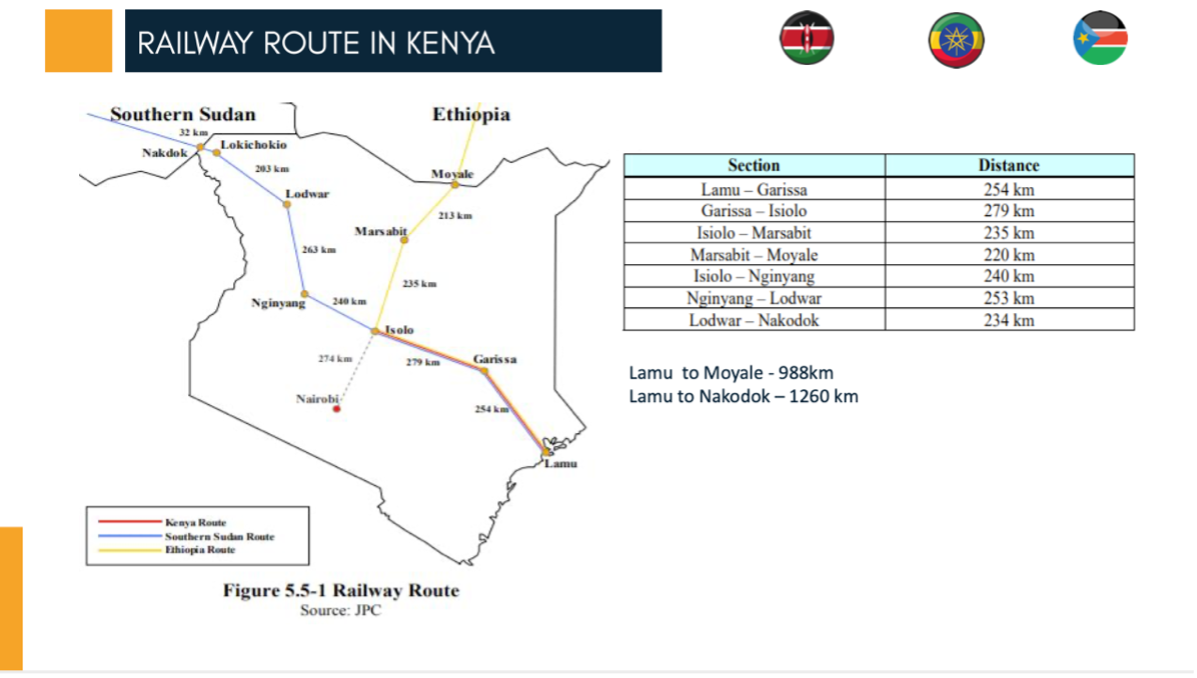
The proposed LAPSSET Railway route, connecting Lamu Port to Nairobi, South Sudan, and Ethiopia, spans approximately 2500km. Kenya inaugurated the first three berths of Lamu Port in May 2021, with the port anticipated to reach a total capacity of 9.2 million TEU upon full completion.
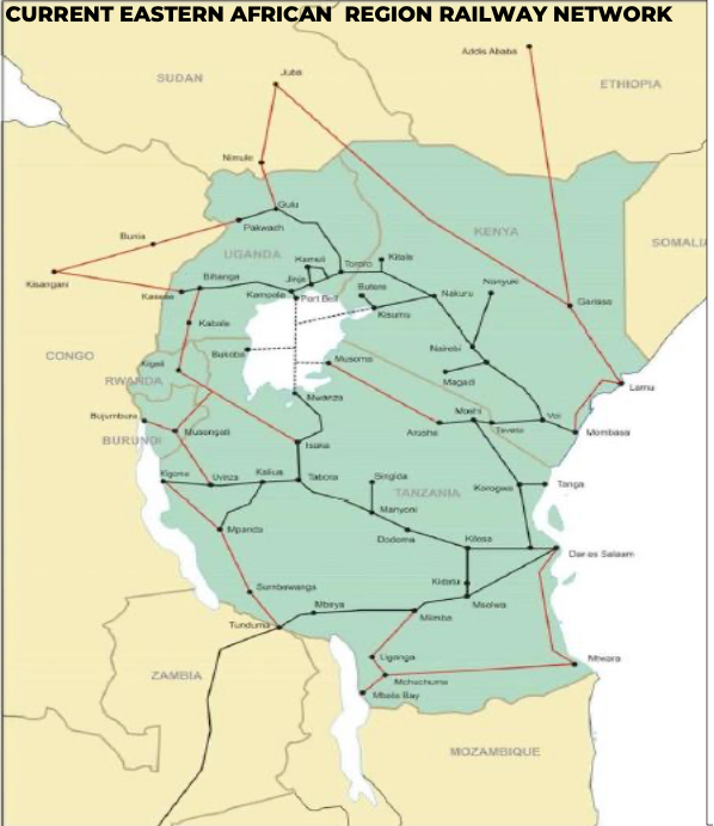
Initial feasibility studies and designs for Kenya’s section of the LAPSSET railway were completed in 2011. Wariithi highlighted that the Kenyan section alone requires an investment of US$14 billion. Ethiopia and Kenya are collaboratively establishing a joint technical coordination committee to devise a unified implementation plan and funding strategy.Wariithi elaborated on the current railway network, which includes the Meter Gauge Railway (MGR) line from Mombasa to Nairobi to Kampala and the SGR from Mombasa to Nairobi and Naivasha. He emphasized that integrating a new line from the Port of Lamu through Nairobi to Isiolo, and extending to Ethiopia and South Sudan, would create an additional trunk line connecting these countries.
— INFO Box —
Kenya’s Meter Gauge Railway has a total network of 2046km spread across the country.
— INFO Box Ends—
He outlined the benefits of the LAPSSET project, noting its potential to foster development along the railway corridor through the establishment of inland industrial facilities, providing punctual, economical, and extensive freight transport services. The project aims to link the East Coast of Africa with the West Coast through the East-West Trans-African Beltway Corridor, covering three regional blocks and potentially connecting 800 million people, integrating a region with a GDP exceeding US$1 trillion.
Furthermore, Kenya is in the process of establishing the Lamu LAPSSET Special Economic Zone, spanning 5000 acres. Wariithi expressed a keen interest in attracting private investment for the majority of the projects, noting that Kenya has already begun offering some operations at the Port of Mombasa to private investors through concessions. He also mentioned challenges such as inadequate funding, regulatory hurdles, local community concerns, climate change, and the complexities of coordinating cross-border projects.
Concerns about South Sudan’s capacity to meet its project commitments were discussed, underlining the importance of support from the African Union and other stakeholders. A roundtable for South Sudan was proposed, similar to the recent G7 support for the Lobito corridor, emphasizing the critical need for assistance to prevent South Sudan from falling behind Ethiopia and Kenya in the project’s development and execution.