Week: 2024-06Print Edition: 2024 – FebruaryEdit Article
  • 10. Completed
Item 1

The Africa Integrated Railway Network Project: Central Corridor Transit Transport Facilitation Agency

The Central Corridor Transit Transport Facilitation Agency (CCTTFA), a collaborative multilateral agency formed through an agreement among the governments of Burundi, the Democratic Republic of the Congo (DRC), Rwanda, Tanzania and Uganda. With Malawi joining recently and news that Zambia is set to join within the coming year.

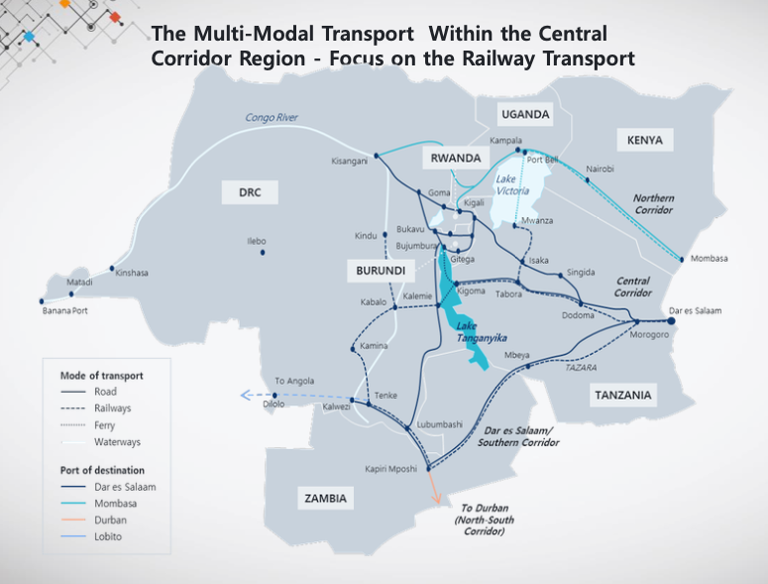
The CCTTFA aims to bolster the integrated multimodal transport and logistics network known as the Central Corridor. This network serves to link these member states with the sea, utilising the port of Dar es Salaam as a pivotal maritime gateway.

During the technical experts’ meeting in December, focused on the African Integrated Railway Network Project in Addis Ababa, Ethiopia, Zaituni Nakonde, the Director of Infrastructure Development at the Central Corridor Transit Transport Facilitation Agency (CCTTFA), delivered a detailed report on the agency’s ongoing projects and future plans. A crucial aspect of CCTTFA’s mission is to enhance the regional railway transport network, aligning with its broader mandate.

In her presentation, Nakonde highlighted the current status of several key projects within the Central Corridor. She noted that the Kigali-Goma-Walikale-Kindu railway line is still in the conceptual phase, outlining the strategic intentions for the Central Corridor’s expansion.
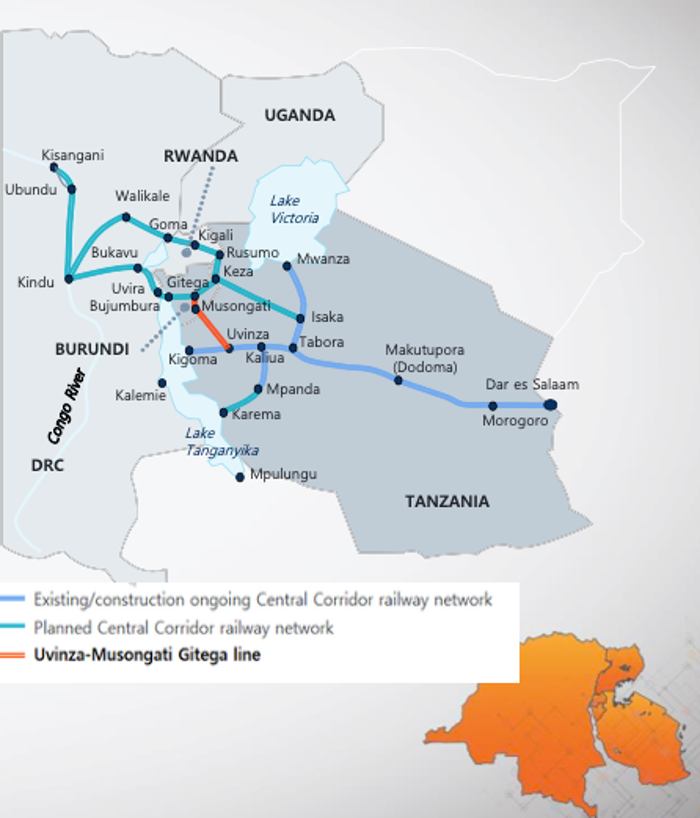
Specifically, Nakonde detailed Phase 2 of the Standard Gauge Railway (SGR), which begins in Tabora and extends over 1,685 km, including 1,590 km of mainline and 95 km of siding, segmented into four distinct lots. Among these, the Tabora to Kigoma stretch, covering 506 km, is at the mobilisation phase, while the procurement for the Uvinza to Musongati to Gitega section, spanning 282 km, is actively underway.
This project aims to establish a cross-border SGR from Uvinza (Tanzania) to Gitega (Burundi), integrating with the existing railway network. The line’s total length is 282 km, with 156 km lying within Tanzania and 126 km in Burundi. Current efforts are concentrated on the tendering phase for this segment.

Additionally, feasibility studies are in progress for extending the railway from Gitega through Bujumbura to Kindu. Expected to complete by December 2024, these studies will cover a total railway length of 824 km, with 200 km in Burundi and 624 km in the Democratic Republic of Congo.

The completed feasibility study for the Kaliua to Mpanda to Karema stretch, measuring 317 km, marks a significant step towards the project’s next phase.

Moreover, the fourth lot, stretching from Isaka to Rusumo to Kigali over 495 km, is under discussion between Tanzania and Rwanda as they plan further project preparations. The overarching Kigali-Goma-Walikale-Kindu initiative remains at the conceptual stage, underscoring the ambitious scope of regional railway development efforts.

Whilst progress is being made in the development of the Standard Gauge Railway (SGR), Zaituni Nakonde highlighted several challenges that are being encountered:

  1. Limited Private Sector Involvement: The high costs associated with the SGR projects have led to governments borrowing to fund them, resulting in rapidly growing debts. This is putting further pressure on the Member States’ debt ceilings. Zaituni believes that it is time the private sector comes in for sustainability and further development of this sector.
  2. Limited Technical Capacity: There is a scarcity of technical expertise in SGR construction and management, with Tanzania being an exception due to its ongoing SGR construction.
  3. High Compensation Costs: The cost of compensating project-affected persons has become a major factor slowing down the SGR’s implementation across Member States. It has been a bit easier in Tanzania because of the land policies within Tanzania, but with the other member states, it really is a challenge.
  4. Lack of Harmonization of Standards: The Northern and Central Corridor SGR systems have been developed to different standards, complicating their inter-operability (e.g., diesel vs electrified systems, platform heights, and axle load limits). The Central Corridors are electric whilst the Northern Corridor, is diesel.
  5. Separate Resource Mobilization: Countries are moving at different paces and negotiating different financing instruments (commercial vs concessional loans), which slows the collective implementation efforts.

Way Forward:

  • CCTTFA’s Commitment to Coordination: Continuously coordinating Member States to commit their own funds for project preparations such as feasibility studies and preliminary designs. This is critical for facilitating further mobilisation of funds for construction, including funding parts of the construction.
  • Joint Resource Mobilisation: CCTTFA is coordinating the joint resource mobilisation for Member States, including engaging development partners to support the preparations and construction phases. Notably, the African Development Bank (AfDB) recently committed to partially funding the Uvinza-Musongati-Gitega Section.
  • Private Sector Engagement: There is an ongoing effort to involve the private sector in some components of the SGR, such as first and last mile connectivity and rolling stock investments.
  • Capacity Building and Knowledge Sharing: CCTTFA is implementing a capacity building and knowledge sharing programme through coordination with Member States, facilitating attachments and secondments to already ongoing SGR constructions.
Item 2

Contributor:

Web

Content Visibility:

SEO Title
SEO Description
SEO Keywords


SEO Keyphrase
Item 2

Item 2

Contributor:

The Central Corridor Transit Transport Facilitation Agency (CCTTFA), a collaborative multilateral agency formed through an agreement among the governments of Burundi, the Democratic Republic of the Congo (DRC), Rwanda, Tanzania and Uganda. With Malawi joining recently and news that Zambia is set to join within the coming year.

The CCTTFA aims to bolster the integrated multimodal transport and logistics network known as the Central Corridor. This network serves to link these member states with the sea, utilising the port of Dar es Salaam as a pivotal maritime gateway.

During the technical experts’ meeting in December, focused on the African Integrated Railway Network Project in Addis Ababa, Ethiopia, Zaituni Nakonde, the Director of Infrastructure Development at the Central Corridor Transit Transport Facilitation Agency (CCTTFA), delivered a detailed report on the agency’s ongoing projects and future plans. A crucial aspect of CCTTFA’s mission is to enhance the regional railway transport network, aligning with its broader mandate.

In her presentation, Nakonde highlighted the current status of several key projects within the Central Corridor. She noted that the Kigali-Goma-Walikale-Kindu railway line is still in the conceptual phase, outlining the strategic intentions for the Central Corridor’s expansion.
Specifically, Nakonde detailed Phase 2 of the Standard Gauge Railway (SGR), which begins in Tabora and extends over 1,685 km, including 1,590 km of mainline and 95 km of siding, segmented into four distinct lots. Among these, the Tabora to Kigoma stretch, covering 506 km, is at the mobilisation phase, while the procurement for the Uvinza to Musongati to Gitega section, spanning 282 km, is actively underway.
This project aims to establish a cross-border SGR from Uvinza (Tanzania) to Gitega (Burundi), integrating with the existing railway network. The line’s total length is 282 km, with 156 km lying within Tanzania and 126 km in Burundi. Current efforts are concentrated on the tendering phase for this segment.

Additionally, feasibility studies are in progress for extending the railway from Gitega through Bujumbura to Kindu. Expected to complete by December 2024, these studies will cover a total railway length of 824 km, with 200 km in Burundi and 624 km in the Democratic Republic of Congo.

The completed feasibility study for the Kaliua to Mpanda to Karema stretch, measuring 317 km, marks a significant step towards the project’s next phase.

Moreover, the fourth lot, stretching from Isaka to Rusumo to Kigali over 495 km, is under discussion between Tanzania and Rwanda as they plan further project preparations. The overarching Kigali-Goma-Walikale-Kindu initiative remains at the conceptual stage, underscoring the ambitious scope of regional railway development efforts.

Whilst progress is being made in the development of the Standard Gauge Railway (SGR), Zaituni Nakonde highlighted several challenges that are being encountered:

  1. Limited Private Sector Involvement: The high costs associated with the SGR projects have led to governments borrowing to fund them, resulting in rapidly growing debts. This is putting further pressure on the Member States’ debt ceilings. Zaituni believes that it is time the private sector comes in for sustainability and further development of this sector.
  2. Limited Technical Capacity: There is a scarcity of technical expertise in SGR construction and management, with Tanzania being an exception due to its ongoing SGR construction.
  3. High Compensation Costs: The cost of compensating project-affected persons has become a major factor slowing down the SGR’s implementation across Member States. It has been a bit easier in Tanzania because of the land policies within Tanzania, but with the other member states, it really is a challenge.
  4. Lack of Harmonization of Standards: The Northern and Central Corridor SGR systems have been developed to different standards, complicating their inter-operability (e.g., diesel vs electrified systems, platform heights, and axle load limits). The Central Corridors are electric whilst the Northern Corridor, is diesel.
  5. Separate Resource Mobilization: Countries are moving at different paces and negotiating different financing instruments (commercial vs concessional loans), which slows the collective implementation efforts.

Way Forward:

  • CCTTFA’s Commitment to Coordination: Continuously coordinating Member States to commit their own funds for project preparations such as feasibility studies and preliminary designs. This is critical for facilitating further mobilisation of funds for construction, including funding parts of the construction.
  • Joint Resource Mobilisation: CCTTFA is coordinating the joint resource mobilisation for Member States, including engaging development partners to support the preparations and construction phases. Notably, the African Development Bank (AfDB) recently committed to partially funding the Uvinza-Musongati-Gitega Section.
  • Private Sector Engagement: There is an ongoing effort to involve the private sector in some components of the SGR, such as first and last mile connectivity and rolling stock investments.
  • Capacity Building and Knowledge Sharing: CCTTFA is implementing a capacity building and knowledge sharing programme through coordination with Member States, facilitating attachments and secondments to already ongoing SGR constructions.

Print

  • 01. Ready for layout

Magazine Section

Africa Update

Instructions