Week: 2025 – 40Print Edition:Edit Article
  • 10. Completed
Item 1

Sub-Saharan Africa Maintains Resilient Growth but Faces Urgent Jobs Challenge

Sub-Saharan Africa’s economy remains resilient, with growth projected to reach 3.8 percent in 2025, up from 3.5 percent in 2024. This acceleration reflects easing inflationary pressures and a modest recovery of investment despite persistent global economic uncertainty.

The number of countries experiencing double-digit inflation has fallen sharply—from twenty-three in October 2022 to ten in July 2025—signalling progress in stabilising prices. Yet, downside risks loom large, including the indirect effects of global trade policy uncertainty, declining investor appetite, and a shrinking pool of external finance, including declining official development assistance. External debt service has more than doubled over the past decade, reaching 2 percent of GDP in 2024. The number of Sub-Saharan African countries in or at high risk of debt distress has nearly tripled, rising from eight in 2014 to twenty-three in 2025—nearly half of the region.

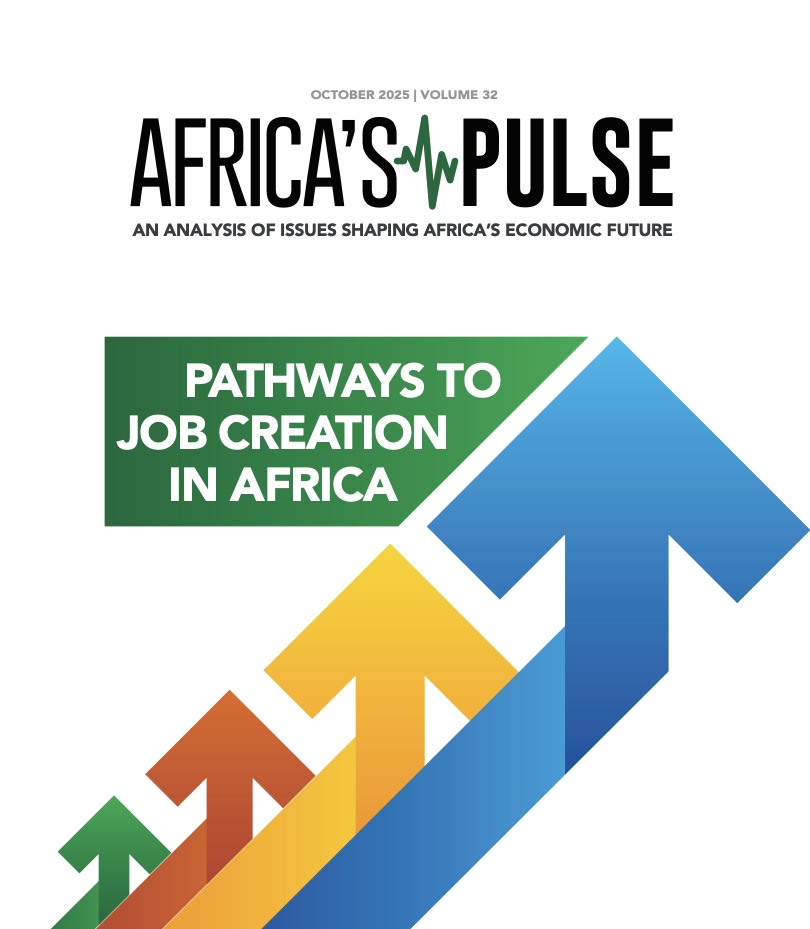
The pace of growth remains insufficient to meaningfully reduce extreme poverty or create the quantity and quality of jobs needed to meet the demands of a rapidly growing labour force. Africa is experiencing the world’s largest and fastest demographic shift. To harness this opportunity, countries must accelerate growth that delivers high-quality jobs—a central theme of the 32nd edition of Africa’s Pulse, the World Bank’s biannual economic update for the region, which this year focuses on Pathways to Job Creation in Africa.

“Over the next quarter century, Sub-Saharan Africa’s working-age population will grow by more than 600 million,” said Andrew Dabalen, World Bank Chief Economist for the Africa Region. “The challenge will be matching this growing population with better jobs, given that only 24 percent of new workers today land wage-paying jobs. A structural shift toward more medium and large firms is essential to generate wage jobs at scale.”

The report outlines a set of policy priorities to help countries stimulate large-scale job creation. Reducing the cost of doing business is critical to enable businesses to expand and new high-growth firms to enter the market. Policies that target the provision of better infrastructure – energy, digital, transport – and human capital and skills development are essential for creating an ecosystem for people and businesses to thrive. Strengthening institutions and governance can ensure stability, curb corruption, and create a predictable business environment that attracts private sector investment.

Stimulating private sector development in sectors such as agribusiness, mining, tourism, healthcare, and housing and construction will also be key. For example, for every job created in tourism, an additional 1.5 jobs are generated in related sectors.  With the right reforms and investments, Sub-Saharan Africa can unlock its vast employment potential and chart a path toward inclusive and sustainable growth.

Go here to get the latest Africa Pulse report: https://www.worldbank.org/en/publication/africa-pulse
Contributor:

Original Article URL 1Original Article URL 2
World Bank
pressafe@worldbank.org
Item 2

Contributor:

Sub-Saharan Africa Maintains Resilient Growth but Faces Urgent Jobs Challenge

Sub-Saharan Africa’s economy remains resilient, with growth projected to reach 3.8 percent in 2025, up from 3.5 percent in 2024. This acceleration reflects easing inflationary pressures and a modest recovery of investment despite persistent global economic uncertainty.

The number of countries experiencing double-digit inflation has fallen sharply—from twenty-three in October 2022 to ten in July 2025—signalling progress in stabilising prices. Yet, downside risks loom large, including the indirect effects of global trade policy uncertainty, declining investor appetite, and a shrinking pool of external finance, including declining official development assistance. External debt service has more than doubled over the past decade, reaching 2 percent of GDP in 2024. The number of Sub-Saharan African countries in or at high risk of debt distress has nearly tripled, rising from eight in 2014 to twenty-three in 2025—nearly half of the region.

The pace of growth remains insufficient to meaningfully reduce extreme poverty or create the quantity and quality of jobs needed to meet the demands of a rapidly growing labour force. Africa is experiencing the world’s largest and fastest demographic shift. To harness this opportunity, countries must accelerate growth that delivers high-quality jobs—a central theme of the 32nd edition of Africa’s Pulse, the World Bank’s biannual economic update for the region, which this year focuses on Pathways to Job Creation in Africa.

“Over the next quarter century, Sub-Saharan Africa’s working-age population will grow by more than 600 million,” said Andrew Dabalen, World Bank Chief Economist for the Africa Region. “The challenge will be matching this growing population with better jobs, given that only 24 percent of new workers today land wage-paying jobs. A structural shift toward more medium and large firms is essential to generate wage jobs at scale.”

The report outlines a set of policy priorities to help countries stimulate large-scale job creation. Reducing the cost of doing business is critical to enable businesses to expand and new high-growth firms to enter the market. Policies that target the provision of better infrastructure – energy, digital, transport – and human capital and skills development are essential for creating an ecosystem for people and businesses to thrive. Strengthening institutions and governance can ensure stability, curb corruption, and create a predictable business environment that attracts private sector investment.

Stimulating private sector development in sectors such as agribusiness, mining, tourism, healthcare, and housing and construction will also be key. For example, for every job created in tourism, an additional 1.5 jobs are generated in related sectors.  With the right reforms and investments, Sub-Saharan Africa can unlock its vast employment potential and chart a path toward inclusive and sustainable growth.

Go here to get the latest Africa Pulse report: https://www.worldbank.org/en/publication/africa-pulse

Web

Content Visibility:

SEO Title
Sub-Saharan Africa Maintains Resilient Growth but Faces Urgent Jobs Challenge
SEO Description
Sub-Saharan Africa’s economy is set to grow by 3.8% in 2025, but urgent action is needed to create jobs and harness the region’s growing working-age population.
SEO Keywords


SEO Keyphrase
  • Finance & Investment
  • PPP- Public Private Partnership
  • Southern Africa
Item 2

PLease tag the world bank accross platforms

https://www.railwaysafrica.com/news/sub-saharan-africa-maintains-resilient-growth-but-faces-urgent-jobs-challenge

Sub-Saharan Africa’s economy remains resilient, with growth projected at 3.8% in 2025, up from 3.5% in 2024, according to the World Bank’s latest Africa’s Pulse. Despite easing inflation and recovering investment, the region faces an urgent challenge: creating enough quality jobs for its rapidly growing working-age population.

Policies promoting private sector growth, better infrastructure and skills development are essential to unlocking Africa’s employment potential.

#SubSaharanAfrica #EconomicGrowth #WorldBank #AfricasPulse #JobCreation #AfricaEconomy

Twitter:

Sub-Saharan Africa’s growth is projected to reach 3.8% in 2025, driven by easing inflation. The World Bank warns job creation must accelerate to meet labour demand.
#SubSaharanAfrica #WorldBank #AfricasPulse #EconomicGrowth #JobCreation

Item 2

Contributor:

Sub-Saharan Africa Maintains Resilient Growth but Faces Urgent Jobs Challenge

Sub-Saharan Africa’s economy remains resilient, with growth projected to reach 3.8 percent in 2025, up from 3.5 percent in 2024. This acceleration reflects easing inflationary pressures and a modest recovery of investment despite persistent global economic uncertainty.

The number of countries experiencing double-digit inflation has fallen sharply—from twenty-three in October 2022 to ten in July 2025—signalling progress in stabilising prices. Yet, downside risks loom large, including the indirect effects of global trade policy uncertainty, declining investor appetite, and a shrinking pool of external finance, including declining official development assistance. External debt service has more than doubled over the past decade, reaching 2 percent of GDP in 2024. The number of Sub-Saharan African countries in or at high risk of debt distress has nearly tripled, rising from eight in 2014 to twenty-three in 2025—nearly half of the region.

The pace of growth remains insufficient to meaningfully reduce extreme poverty or create the quantity and quality of jobs needed to meet the demands of a rapidly growing labour force. Africa is experiencing the world’s largest and fastest demographic shift. To harness this opportunity, countries must accelerate growth that delivers high-quality jobs—a central theme of the 32nd edition of Africa’s Pulse, the World Bank’s biannual economic update for the region, which this year focuses on Pathways to Job Creation in Africa.

“Over the next quarter century, Sub-Saharan Africa’s working-age population will grow by more than 600 million,” said Andrew Dabalen, World Bank Chief Economist for the Africa Region. “The challenge will be matching this growing population with better jobs, given that only 24 percent of new workers today land wage-paying jobs. A structural shift toward more medium and large firms is essential to generate wage jobs at scale.”

The report outlines a set of policy priorities to help countries stimulate large-scale job creation. Reducing the cost of doing business is critical to enable businesses to expand and new high-growth firms to enter the market. Policies that target the provision of better infrastructure – energy, digital, transport – and human capital and skills development are essential for creating an ecosystem for people and businesses to thrive. Strengthening institutions and governance can ensure stability, curb corruption, and create a predictable business environment that attracts private sector investment.

Stimulating private sector development in sectors such as agribusiness, mining, tourism, healthcare, and housing and construction will also be key. For example, for every job created in tourism, an additional 1.5 jobs are generated in related sectors.  With the right reforms and investments, Sub-Saharan Africa can unlock its vast employment potential and chart a path toward inclusive and sustainable growth.

Go here to get the latest Africa Pulse report: https://www.worldbank.org/en/publication/africa-pulse

Print

Magazine Section

Africa Update

Instructions