Week: 2026 – 25Print Edition:Edit Article
  • 05. LinkedIn Newsletter
Item 1

Rail Recovery, Mode Optimisation and the Cost of Prolonged Planning

Africa’s intermodal transport agenda is often framed around new infrastructure, but the more immediate opportunity in many corridors lies in recovering capacity that already exists, directing freight to the mode best suited to carry it, and reducing the time lost between planning, reform and execution. For rail operators working within constrained balance sheets and reforming institutional environments, the question is not whether rail has a role in intermodal systems, but whether infrastructure rehabilitation, customer alignment, private-sector participation and governance can be brought together quickly enough to change corridor performance.

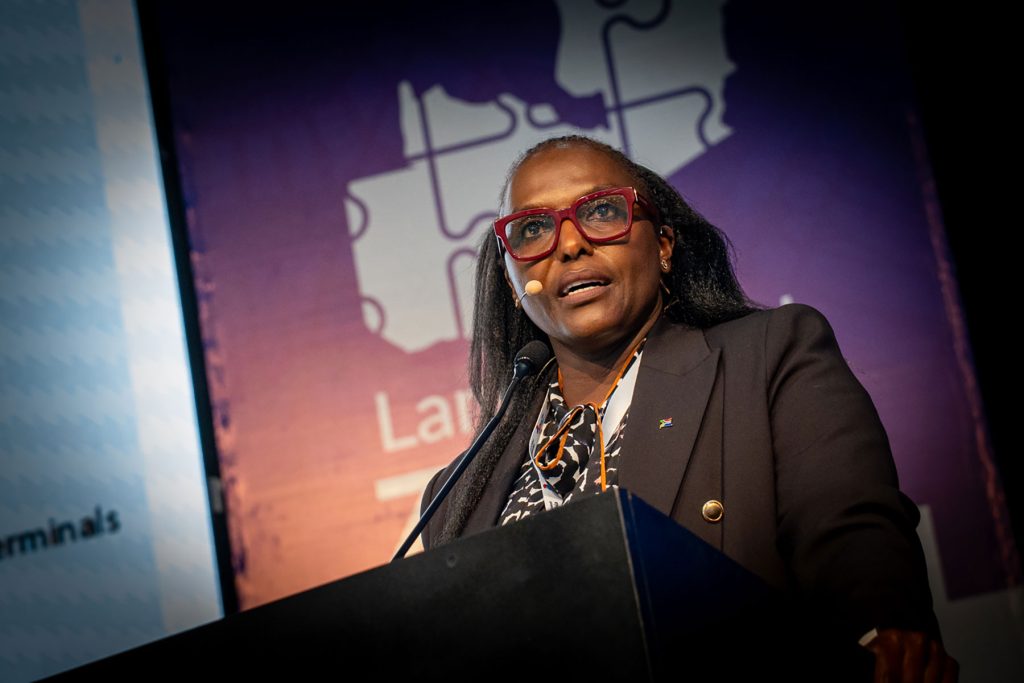
Yolisa Kani of Transnet placed rail recovery within that practical context during the Beyond Borders: Building Africa’s Intermodal Transport System panel discussion at Land-Linked Zambia 2026. Speaking from the perspective of a state-owned entity undergoing reform, she made the case that rail-addressable cargo can move back from road to rail, provided the operating environment supports delivery. Transnet’s recent performance was cited as evidence of that possibility, with volumes having increased from 149 million tonnes three years ago to 167 million tonnes, against a target of 180 million tonnes.

The improvement was supported by a government guarantee from the National Treasury, but the recovery was not a government intervention alone. Customer collaboration was also part of the response, particularly where practical interventions were required that Transnet could not execute independently. Rail recovery depends not only on the operator and the state, but also on the cargo owners whose freight underpins the business case for network recovery.

Where infrastructure condition limits performance, rehabilitation becomes unavoidable. Without cargo on trains, rail authorities and operators cannot generate the revenue required to sustain and improve operations, but without targeted capital investment, the cargo cannot always return at scale. In a constrained funding environment, the issue becomes how to crowd in private-sector capital while maintaining credible governance and ensuring that strategic transport assets continue to serve national and regional objectives.

Rail reform provides part of the answer, particularly where government support for private-sector participation gives funders confidence that the operating environment is changing. Kani noted that interest has come from development finance institutions as well as commercial banks. Such confidence is not automatic. It depends on governance, transparent commitments and delivery against the operational improvements that have been promised. Reform, in this sense, is not only a policy position or a financing mechanism; it is tested through execution.

The regional corridor dimension adds further complexity. Engagement with Zambia Railway Lines was referenced in relation to resetting corridor relationships, while the broader discussion highlighted the amount of attention currently directed towards the western side, including the Lobito Corridor, and towards TAZARA. Comparatively less attention appears to be placed on the North-South Corridor, despite its strategic role in regional freight movement.

Existing capacity on parts of the corridor may offer a starting point before major new infrastructure intervention is considered. A study conducted three years ago indicated that, in its current form, the line could move about 1 million tonnes without infrastructure works. With stronger government-to-government coordination, firmer cargo commitments, mining-sector support and aligned private-sector participation, existing assets could potentially deliver more than they do at present.

Infrastructure shortages are real, but weak utilisation of existing infrastructure can be just as damaging. Where rail capacity is available but underused, where corridor relationships are not structured around cargo flows, or where customers continue to rely on road for freight that should move by rail, the result is an inefficient transport mix and additional pressure on roads that were not designed to absorb that level of heavy bulk traffic.

Recent external shocks have made the cost of slow execution more visible. Over the past six years, COVID, Red Sea disruption, and wider geopolitical instability have tested logistics systems globally and regionally. Yet intra-African trade has not accelerated at the pace required, and opportunities created by shifts in shipping patterns are not always captured because corridor systems lack the agility, capacity or operational readiness to respond.

For the North-South Corridor, the implementation question is becoming increasingly difficult to avoid. Revitalisation has been discussed for many years, but the region cannot remain in a cycle of studies, policy statements and delayed execution. Partnerships need to be operationalised, cargo commitments need to be secured, funding structures need to be tested, and reform needs to move from institutional design into measurable performance.

A more effective intermodal system will require more than capital. Existing rail capacity must be recovered where recovery is possible. Infrastructure must be rehabilitated where it has become the binding constraint. Customers need to be part of the solution where their cargo underpins the rail business case. Governments must support reform through credible governance, policy consistency and corridor-level coordination. Financiers must be able to assess projects that have been properly prepared and technically validated.

The cost of prolonged planning is measured in lost freight, strained road networks, underused rail assets and missed opportunities when regional and global logistics shifts create openings that the system is not yet ready to capture.
Item 2

Contributor: Phillippa Dean

Rail Recovery, Mode Optimisation and the Cost of Prolonged Planning

Africa’s intermodal transport agenda is often framed around new infrastructure, but the more immediate opportunity in many corridors lies in recovering capacity that already exists, directing freight to the mode best suited to carry it, and reducing the time lost between planning, reform and execution. For rail operators working within constrained balance sheets and reforming institutional environments, the question is not whether rail has a role in intermodal systems, but whether infrastructure rehabilitation, customer alignment, private-sector participation and governance can be brought together quickly enough to change corridor performance.

Yolisa Kani of Transnet placed rail recovery within that practical context during the Beyond Borders: Building Africa’s Intermodal Transport System panel discussion at Land-Linked Zambia 2026. Speaking from the perspective of a state-owned entity undergoing reform, she made the case that rail-addressable cargo can move back from road to rail, provided the operating environment supports delivery. Transnet’s recent performance was cited as evidence of that possibility, with volumes having increased from 149 million tonnes three years ago to 167 million tonnes, against a target of 180 million tonnes.

The improvement was supported by a government guarantee from the National Treasury, but the recovery was not a government intervention alone. Customer collaboration was also part of the response, particularly where practical interventions were required that Transnet could not execute independently. Rail recovery depends not only on the operator and the state, but also on the cargo owners whose freight underpins the business case for network recovery.

Where infrastructure condition limits performance, rehabilitation becomes unavoidable. Without cargo on trains, rail authorities and operators cannot generate the revenue required to sustain and improve operations, but without targeted capital investment, the cargo cannot always return at scale. In a constrained funding environment, the issue becomes how to crowd in private-sector capital while maintaining credible governance and ensuring that strategic transport assets continue to serve national and regional objectives.

Rail reform provides part of the answer, particularly where government support for private-sector participation gives funders confidence that the operating environment is changing. Kani noted that interest has come from development finance institutions as well as commercial banks. Such confidence is not automatic. It depends on governance, transparent commitments and delivery against the operational improvements that have been promised. Reform, in this sense, is not only a policy position or a financing mechanism; it is tested through execution.

The regional corridor dimension adds further complexity. Engagement with Zambia Railway Lines was referenced in relation to resetting corridor relationships, while the broader discussion highlighted the amount of attention currently directed towards the western side, including the Lobito Corridor, and towards TAZARA. Comparatively less attention appears to be placed on the North-South Corridor, despite its strategic role in regional freight movement.

Existing capacity on parts of the corridor may offer a starting point before major new infrastructure intervention is considered. A study conducted three years ago indicated that, in its current form, the line could move about 1 million tonnes without infrastructure works. With stronger government-to-government coordination, firmer cargo commitments, mining-sector support and aligned private-sector participation, existing assets could potentially deliver more than they do at present.

Infrastructure shortages are real, but weak utilisation of existing infrastructure can be just as damaging. Where rail capacity is available but underused, where corridor relationships are not structured around cargo flows, or where customers continue to rely on road for freight that should move by rail, the result is an inefficient transport mix and additional pressure on roads that were not designed to absorb that level of heavy bulk traffic.

Recent external shocks have made the cost of slow execution more visible. Over the past six years, COVID, Red Sea disruption, and wider geopolitical instability have tested logistics systems globally and regionally. Yet intra-African trade has not accelerated at the pace required, and opportunities created by shifts in shipping patterns are not always captured because corridor systems lack the agility, capacity or operational readiness to respond.

For the North-South Corridor, the implementation question is becoming increasingly difficult to avoid. Revitalisation has been discussed for many years, but the region cannot remain in a cycle of studies, policy statements and delayed execution. Partnerships need to be operationalised, cargo commitments need to be secured, funding structures need to be tested, and reform needs to move from institutional design into measurable performance.

A more effective intermodal system will require more than capital. Existing rail capacity must be recovered where recovery is possible. Infrastructure must be rehabilitated where it has become the binding constraint. Customers need to be part of the solution where their cargo underpins the rail business case. Governments must support reform through credible governance, policy consistency and corridor-level coordination. Financiers must be able to assess projects that have been properly prepared and technically validated.

The cost of prolonged planning is measured in lost freight, strained road networks, underused rail assets and missed opportunities when regional and global logistics shifts create openings that the system is not yet ready to capture.

Why it Matters


Africa’s intermodal transport agenda will not be delivered by new infrastructure alone. The discussion around rail recovery, customer collaboration, private-sector participation and infrastructure rehabilitation shows that existing rail capacity must be brought back into productive use if corridors are to perform more effectively.

For the North-South Corridor and other regional freight routes, the issue is increasingly about execution. Prolonged planning leaves rail assets underused, shifts rail-suited freight onto roads, increases infrastructure strain and limits the region’s ability to respond when global logistics disruptions create new freight opportunities.


Web

Content Visibility:

SEO Title
Rail Recovery, Mode Optimisation and the Cost of Prolonged Planning
SEO Description
Rail recovery, infrastructure rehabilitation and mode optimisation are becoming central to Africa’s intermodal transport agenda, with the North-South Corridor highlighting the cost of prolonged planning.
SEO Keywords
rail recovery and mode optimisation, African rail recovery, rail recovery Africa, mode optimisation, African transport corridors, intermodal transport Africa, rail-addressable cargo, rail freight recovery, Transnet rail recovery, Yolisa Kani Transnet, Land-Linked Zambia 2026, Beyond Borders intermodal transport, North-South Corridor, North-South Corridor rail, Zambia Railway Lines, TAZARA, Lobito Corridor, rail infrastructure rehabilitation, private-sector participation rail, rail reform Africa, rail freight corridors, African logistics systems, rail corridor performance, transport infrastructure finance, customer collaboration rail, African rail reform, regional freight movement, corridor revitalisation, intra-African trade logistics, Railways Africa

SEO Keyphrase
rail recovery and mode optimisation
  • Finance & Investment
  • Freight & Logistics
  • Infrastructure
  • Policy & Legislation
  • PPP- Public Private Partnership
  • Railway Operations
  • Regional Trade
  • Transport Infrastructure
  • ALL - Southern Africa
Item 2

https://www.railwaysafrica.com/news/rail-recovery-mode-optimisation-and-the-cost-of-prolonged-planning

Item 2

Contributor: Phillippa Dean

Rail Recovery, Mode Optimisation and the Cost of Prolonged Planning

Africa’s intermodal transport agenda is often framed around new infrastructure, but the more immediate opportunity in many corridors lies in recovering capacity that already exists, directing freight to the mode best suited to carry it, and reducing the time lost between planning, reform and execution. For rail operators working within constrained balance sheets and reforming institutional environments, the question is not whether rail has a role in intermodal systems, but whether infrastructure rehabilitation, customer alignment, private-sector participation and governance can be brought together quickly enough to change corridor performance.

Yolisa Kani of Transnet placed rail recovery within that practical context during the Beyond Borders: Building Africa’s Intermodal Transport System panel discussion at Land-Linked Zambia 2026. Speaking from the perspective of a state-owned entity undergoing reform, she made the case that rail-addressable cargo can move back from road to rail, provided the operating environment supports delivery. Transnet’s recent performance was cited as evidence of that possibility, with volumes having increased from 149 million tonnes three years ago to 167 million tonnes, against a target of 180 million tonnes.

The improvement was supported by a government guarantee from the National Treasury, but the recovery was not a government intervention alone. Customer collaboration was also part of the response, particularly where practical interventions were required that Transnet could not execute independently. Rail recovery depends not only on the operator and the state, but also on the cargo owners whose freight underpins the business case for network recovery.

Where infrastructure condition limits performance, rehabilitation becomes unavoidable. Without cargo on trains, rail authorities and operators cannot generate the revenue required to sustain and improve operations, but without targeted capital investment, the cargo cannot always return at scale. In a constrained funding environment, the issue becomes how to crowd in private-sector capital while maintaining credible governance and ensuring that strategic transport assets continue to serve national and regional objectives.

Rail reform provides part of the answer, particularly where government support for private-sector participation gives funders confidence that the operating environment is changing. Kani noted that interest has come from development finance institutions as well as commercial banks. Such confidence is not automatic. It depends on governance, transparent commitments and delivery against the operational improvements that have been promised. Reform, in this sense, is not only a policy position or a financing mechanism; it is tested through execution.

The regional corridor dimension adds further complexity. Engagement with Zambia Railway Lines was referenced in relation to resetting corridor relationships, while the broader discussion highlighted the amount of attention currently directed towards the western side, including the Lobito Corridor, and towards TAZARA. Comparatively less attention appears to be placed on the North-South Corridor, despite its strategic role in regional freight movement.

Existing capacity on parts of the corridor may offer a starting point before major new infrastructure intervention is considered. A study conducted three years ago indicated that, in its current form, the line could move about 1 million tonnes without infrastructure works. With stronger government-to-government coordination, firmer cargo commitments, mining-sector support and aligned private-sector participation, existing assets could potentially deliver more than they do at present.

Infrastructure shortages are real, but weak utilisation of existing infrastructure can be just as damaging. Where rail capacity is available but underused, where corridor relationships are not structured around cargo flows, or where customers continue to rely on road for freight that should move by rail, the result is an inefficient transport mix and additional pressure on roads that were not designed to absorb that level of heavy bulk traffic.

Recent external shocks have made the cost of slow execution more visible. Over the past six years, COVID, Red Sea disruption, and wider geopolitical instability have tested logistics systems globally and regionally. Yet intra-African trade has not accelerated at the pace required, and opportunities created by shifts in shipping patterns are not always captured because corridor systems lack the agility, capacity or operational readiness to respond.

For the North-South Corridor, the implementation question is becoming increasingly difficult to avoid. Revitalisation has been discussed for many years, but the region cannot remain in a cycle of studies, policy statements and delayed execution. Partnerships need to be operationalised, cargo commitments need to be secured, funding structures need to be tested, and reform needs to move from institutional design into measurable performance.

A more effective intermodal system will require more than capital. Existing rail capacity must be recovered where recovery is possible. Infrastructure must be rehabilitated where it has become the binding constraint. Customers need to be part of the solution where their cargo underpins the rail business case. Governments must support reform through credible governance, policy consistency and corridor-level coordination. Financiers must be able to assess projects that have been properly prepared and technically validated.

The cost of prolonged planning is measured in lost freight, strained road networks, underused rail assets and missed opportunities when regional and global logistics shifts create openings that the system is not yet ready to capture.

Print

Magazine Section

Africa Update

Instructions

Photo, Yolisa Kani – LLZ plenary 3 – Beyond Borders: Building Africa’s Intermodal Transport System 2 – no social media for this copy