Week: 2025 – 24Print Edition:Edit Article
  • 10. Completed
Item 1

Mozambique Consults on Railway Access Regulation

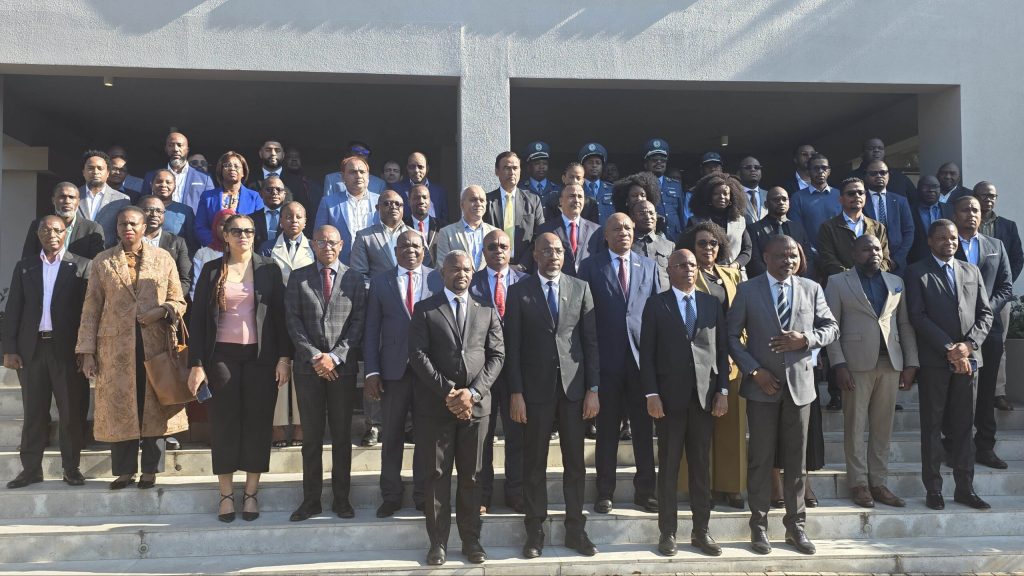
Mozambique’s Ministry of Transport and Logistics held a public consultation meeting on the proposed Regulation for Access to Railway Activity, a measure intended to modernise the governance of the country’s railway sector and create a clearer framework for operators, investors and infrastructure users.

The consultation took place in Maputo on 28 May 2026 and was organised by the Ministry of Transport and Logistics. According to the ministry, the regulation is being developed at a time when Southern Africa is intensifying the development of regional corridors, expanding intra-regional trade and accelerating investment in strategic infrastructure.

The proposed instrument is intended to reposition Mozambique’s railway sector as a stronger driver of economic competitiveness, regional integration and logistics transformation. It is also expected to support more efficient use of railway infrastructure, improve predictability for market participants and open the sector to greater investment.

Speaking during the consultation, Agostinho Langa Júnior, Chairman of the Board of Directors of Caminhos de Ferro de Moçambique (CFM), said the regulation aims to establish clear rules for access to railway activity, similar to the framework already applied in the port sector.

He noted that, in Mozambique’s central region, two mining companies already transport minerals by rail under an agreement with CFM for access to the Sena Line.

“This regulation establishes rules for the licensing of these companies. CFM is already licensed, so there is no breaking of monopolies here,” said Agostinho Langa Júnior.

João Matlombe, Minister of Transport and Logistics, said the new regulation is intended to establish a clear, balanced and technically robust access framework. He said the framework should stimulate healthy competition, promote greater use of railway infrastructure, encourage the entry of new operators and investors, and support interoperability and operational efficiency.

The minister also linked the regulation to the broader integration of Mozambique’s railway and port systems, as well as the consolidation of national and regional logistics corridors as competitive platforms for trade and development.

“The competitiveness of the future will not be determined solely by the existence of infrastructure, but above all by the quality of its regulation, the efficiency of its services, and the capacity to create environments of trust for investors, operators, and users. It is precisely in this direction that we want to move forward,” said João Matlombe.

The proposed railway access regulation forms part of Mozambique’s wider effort to strengthen rail governance, support corridor development and create a more structured environment for infrastructure access, licensing and investment.
Item 2

Contributor:

Mozambique Consults on Railway Access Regulation

Mozambique’s Ministry of Transport and Logistics held a public consultation meeting on the proposed Regulation for Access to Railway Activity, a measure intended to modernise the governance of the country’s railway sector and create a clearer framework for operators, investors and infrastructure users.

The consultation took place in Maputo on 28 May 2026 and was organised by the Ministry of Transport and Logistics. According to the ministry, the regulation is being developed at a time when Southern Africa is intensifying the development of regional corridors, expanding intra-regional trade and accelerating investment in strategic infrastructure.

The proposed instrument is intended to reposition Mozambique’s railway sector as a stronger driver of economic competitiveness, regional integration and logistics transformation. It is also expected to support more efficient use of railway infrastructure, improve predictability for market participants and open the sector to greater investment.

Speaking during the consultation, Agostinho Langa Júnior, Chairman of the Board of Directors of Caminhos de Ferro de Moçambique (CFM), said the regulation aims to establish clear rules for access to railway activity, similar to the framework already applied in the port sector.

He noted that, in Mozambique’s central region, two mining companies already transport minerals by rail under an agreement with CFM for access to the Sena Line.

“This regulation establishes rules for the licensing of these companies. CFM is already licensed, so there is no breaking of monopolies here,” said Agostinho Langa Júnior.

João Matlombe, Minister of Transport and Logistics, said the new regulation is intended to establish a clear, balanced and technically robust access framework. He said the framework should stimulate healthy competition, promote greater use of railway infrastructure, encourage the entry of new operators and investors, and support interoperability and operational efficiency.

The minister also linked the regulation to the broader integration of Mozambique’s railway and port systems, as well as the consolidation of national and regional logistics corridors as competitive platforms for trade and development.

“The competitiveness of the future will not be determined solely by the existence of infrastructure, but above all by the quality of its regulation, the efficiency of its services, and the capacity to create environments of trust for investors, operators, and users. It is precisely in this direction that we want to move forward,” said João Matlombe.

The proposed railway access regulation forms part of Mozambique’s wider effort to strengthen rail governance, support corridor development and create a more structured environment for infrastructure access, licensing and investment.

Why it Matters


Mozambique’s proposed railway access regulation comes at a time when the country’s rail and port systems are central to regional corridor performance. By setting clearer rules for railway access, licensing and operational participation, the regulation could help improve predictability for operators, investors and infrastructure users.

The consultation also points to a wider policy shift in Southern Africa, where infrastructure alone is no longer sufficient to drive competitiveness. Regulation, interoperability, corridor coordination and investor confidence are becoming central to how rail systems support trade, logistics efficiency and regional integration.


Web

Content Visibility:

SEO Title
Mozambique Consults on Railway Access Regulation for Operators
SEO Description
Mozambique has held a public consultation on proposed railway access regulation aimed at strengthening rail governance, licensing, investment and corridor efficiency.
SEO Keywords
Mozambique railway access regulation, Mozambique railway sector, Regulation for Access to Railway Activity, Mozambique rail governance, Ministry of Transport and Logistics Mozambique, João Matlombe, Agostinho Langa Júnior, Caminhos de Ferro de Moçambique, CFM Mozambique, Sena Line, Mozambique rail corridors, Mozambique logistics corridors, Southern Africa rail corridors, railway licensing Mozambique, railway infrastructure access, railway interoperability Mozambique, railway investment Mozambique, Mozambique port rail integration, regional trade corridors, railway operators Mozambique, rail market regulation, railway competition Mozambique, Mozambique transport logistics, African railway regulation, Southern Africa railway development

SEO Keyphrase
Mozambique railway access regulation
  • African Railway Operator News
  • Freight & Logistics
  • Open Access
  • Policy & Legislation
  • PPP- Public Private Partnership
  • Regional Trade
  • Transport Infrastructure
  • Mozambique
Item 2

https://www.railwaysafrica.com/news/mozambique-consults-on-railway-access-regulation

Mozambique’s Ministry of Transport and Logistics has held a public consultation on the proposed Regulation for Access to Railway Activity.
The regulation is intended to modernise rail sector governance and create a clearer framework for operators, investors and infrastructure users.
According to the ministry, the proposed framework aims to stimulate healthy competition, promote greater use of railway infrastructure, encourage the entry of new operators and investors, and support interoperability and operational efficiency.
The consultation also comes as Southern Africa continues to intensify regional corridor development, intra-regional trade and investment in strategic infrastructure.
Read More:
#Mozambique #RailwaysAfrica #AfricanRailways #RailRegulation #Railway #Transport ##RailInfrastructure #CFM #TransportCorridors #Logistics #Corridors #Investment #Freight #RailOperators

Item 2

Contributor:

Mozambique Consults on Railway Access Regulation

Mozambique’s Ministry of Transport and Logistics held a public consultation meeting on the proposed Regulation for Access to Railway Activity, a measure intended to modernise the governance of the country’s railway sector and create a clearer framework for operators, investors and infrastructure users.

The consultation took place in Maputo on 28 May 2026 and was organised by the Ministry of Transport and Logistics. According to the ministry, the regulation is being developed at a time when Southern Africa is intensifying the development of regional corridors, expanding intra-regional trade and accelerating investment in strategic infrastructure.

The proposed instrument is intended to reposition Mozambique’s railway sector as a stronger driver of economic competitiveness, regional integration and logistics transformation. It is also expected to support more efficient use of railway infrastructure, improve predictability for market participants and open the sector to greater investment.

Speaking during the consultation, Agostinho Langa Júnior, Chairman of the Board of Directors of Caminhos de Ferro de Moçambique (CFM), said the regulation aims to establish clear rules for access to railway activity, similar to the framework already applied in the port sector.

He noted that, in Mozambique’s central region, two mining companies already transport minerals by rail under an agreement with CFM for access to the Sena Line.

“This regulation establishes rules for the licensing of these companies. CFM is already licensed, so there is no breaking of monopolies here,” said Agostinho Langa Júnior.

João Matlombe, Minister of Transport and Logistics, said the new regulation is intended to establish a clear, balanced and technically robust access framework. He said the framework should stimulate healthy competition, promote greater use of railway infrastructure, encourage the entry of new operators and investors, and support interoperability and operational efficiency.

The minister also linked the regulation to the broader integration of Mozambique’s railway and port systems, as well as the consolidation of national and regional logistics corridors as competitive platforms for trade and development.

“The competitiveness of the future will not be determined solely by the existence of infrastructure, but above all by the quality of its regulation, the efficiency of its services, and the capacity to create environments of trust for investors, operators, and users. It is precisely in this direction that we want to move forward,” said João Matlombe.

The proposed railway access regulation forms part of Mozambique’s wider effort to strengthen rail governance, support corridor development and create a more structured environment for infrastructure access, licensing and investment.

Print

Magazine Section

Africa Update

Instructions