Week: 2026 – 10Print Edition:Edit Article
  • 10. Completed
Item 1

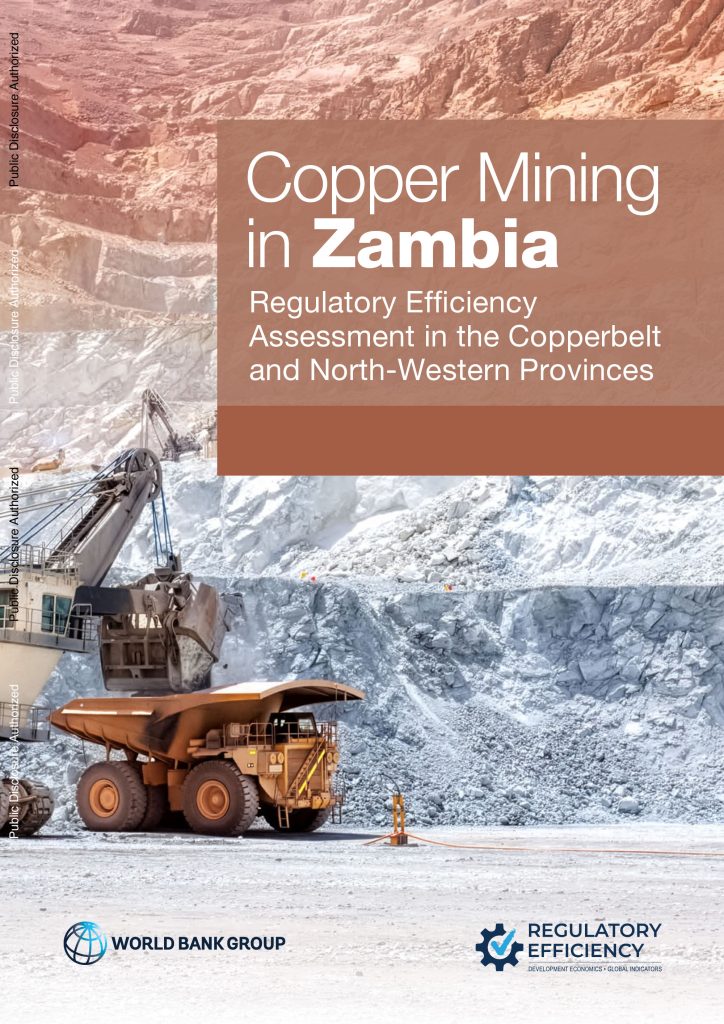
Copper Mining in Zambia: Regulatory Efficiency Assessment in the Copperbelt and North-Western Provinces – World Bank Group

Zambia is Africa’s second-largest and the world’s ninth-largest copper producer, with the mining sector playing a central role in national economic development. In support of this strategic industry, the Government of Zambia has set an ambitious target to increase copper production to three million tonnes annually by 2031, supported by policies intended to stimulate investment in exploration, mining, processing, and related services.

The report Copper Mining in Zambia: Regulatory Efficiency Assessment in the Copperbelt and North-Western Provinces, developed as a pilot initiative by the World Bank Group, examines the effectiveness of the regulatory framework governing copper mining activities. While Zambia has established laws aimed at promoting sustainable development and economic diversification, the assessment finds that licensing processes and regulatory procedures remain complex and inefficient, creating uncertainty for both existing mining companies and potential new investors.

Focusing specifically on exploration and mining licences, the study analyses how regulatory processes function in practice at the regional level. The assessment applies a sector-specific adaptation of the Subnational Business Ready methodology to evaluate the business environment in the Copperbelt and North-Western Provinces, two of the country’s principal mining regions.

Based on data collected through surveys and interviews conducted between June and September 2025 with industry participants and stakeholders, the report provides an evidence-based analysis of regulatory performance and identifies opportunities to improve efficiency, transparency, and alignment with international best practice in the mining sector.

Get it here: https://documents1.worldbank.org/curated/en/099658502272620000/pdf/IDU-c19a4930-5b19-409e-9be6-918d3340a048.pdf
Item 2

Contributor:

Copper Mining in Zambia: Regulatory Efficiency Assessment in the Copperbelt and North-Western Provinces – World Bank Group

Zambia is Africa’s second-largest and the world’s ninth-largest copper producer, with the mining sector playing a central role in national economic development. In support of this strategic industry, the Government of Zambia has set an ambitious target to increase copper production to three million tonnes annually by 2031, supported by policies intended to stimulate investment in exploration, mining, processing, and related services.

The report Copper Mining in Zambia: Regulatory Efficiency Assessment in the Copperbelt and North-Western Provinces, developed as a pilot initiative by the World Bank Group, examines the effectiveness of the regulatory framework governing copper mining activities. While Zambia has established laws aimed at promoting sustainable development and economic diversification, the assessment finds that licensing processes and regulatory procedures remain complex and inefficient, creating uncertainty for both existing mining companies and potential new investors.

Focusing specifically on exploration and mining licences, the study analyses how regulatory processes function in practice at the regional level. The assessment applies a sector-specific adaptation of the Subnational Business Ready methodology to evaluate the business environment in the Copperbelt and North-Western Provinces, two of the country’s principal mining regions.

Based on data collected through surveys and interviews conducted between June and September 2025 with industry participants and stakeholders, the report provides an evidence-based analysis of regulatory performance and identifies opportunities to improve efficiency, transparency, and alignment with international best practice in the mining sector.

Get it here: https://documents1.worldbank.org/curated/en/099658502272620000/pdf/IDU-c19a4930-5b19-409e-9be6-918d3340a048.pdf

Web

Content Visibility:

SEO Title
World Bank Report Assesses Regulatory Efficiency in Zambia’s Copper Mining Sector
SEO Description
World Bank assessment examines regulatory efficiency in Zambia’s copper mining sector, focusing on licensing processes in the Copperbelt and North-Western Provinces.
SEO Keywords


SEO Keyphrase
  • Finance & Investment
  • Freight & Logistics
  • Infrastructure
  • Mining
  • Policy & Legislation
  • Zambia
Item 2

Tag the world bank

https://www.railwaysafrica.com/news/copper-mining-in-zambia-regulatory-efficiency-assessment-in-the-copperbelt-and-north-western-provinces-world-bank-group

World Bank assessment reviews regulatory efficiency in Zambia’s copper mining sector, focusing on licensing processes in the Copperbelt and North-Western Provinces. The report, Copper Mining in Zambia: Regulatory Efficiency Assessment in the Copperbelt and North-Western Provinces, comes at a critical time as Zambia targets three million tonnes of copper production annually by 2031. Improving regulatory efficiency will be essential to supporting investment and sustaining growth in the sector.

#CopperMining #ZambiaMining #Mining #Investment #AfricanMining

Item 2

Contributor:

Copper Mining in Zambia: Regulatory Efficiency Assessment in the Copperbelt and North-Western Provinces – World Bank Group

Zambia is Africa’s second-largest and the world’s ninth-largest copper producer, with the mining sector playing a central role in national economic development. In support of this strategic industry, the Government of Zambia has set an ambitious target to increase copper production to three million tonnes annually by 2031, supported by policies intended to stimulate investment in exploration, mining, processing, and related services.

The report Copper Mining in Zambia: Regulatory Efficiency Assessment in the Copperbelt and North-Western Provinces, developed as a pilot initiative by the World Bank Group, examines the effectiveness of the regulatory framework governing copper mining activities. While Zambia has established laws aimed at promoting sustainable development and economic diversification, the assessment finds that licensing processes and regulatory procedures remain complex and inefficient, creating uncertainty for both existing mining companies and potential new investors.

Focusing specifically on exploration and mining licences, the study analyses how regulatory processes function in practice at the regional level. The assessment applies a sector-specific adaptation of the Subnational Business Ready methodology to evaluate the business environment in the Copperbelt and North-Western Provinces, two of the country’s principal mining regions.

Based on data collected through surveys and interviews conducted between June and September 2025 with industry participants and stakeholders, the report provides an evidence-based analysis of regulatory performance and identifies opportunities to improve efficiency, transparency, and alignment with international best practice in the mining sector.

Get it here: https://documents1.worldbank.org/curated/en/099658502272620000/pdf/IDU-c19a4930-5b19-409e-9be6-918d3340a048.pdf

Print

Magazine Section

Africa Update

Instructions

Use the cover of the report as an image