3D Printing Brings Trains to the Track Faster
Deutsche Bahn reaches the mark of 100,000 3D-printed spare parts • Construction of the digital warehouse in full swing • DB chairman Gerd tom Markotten: “This technology transforms maintenance”
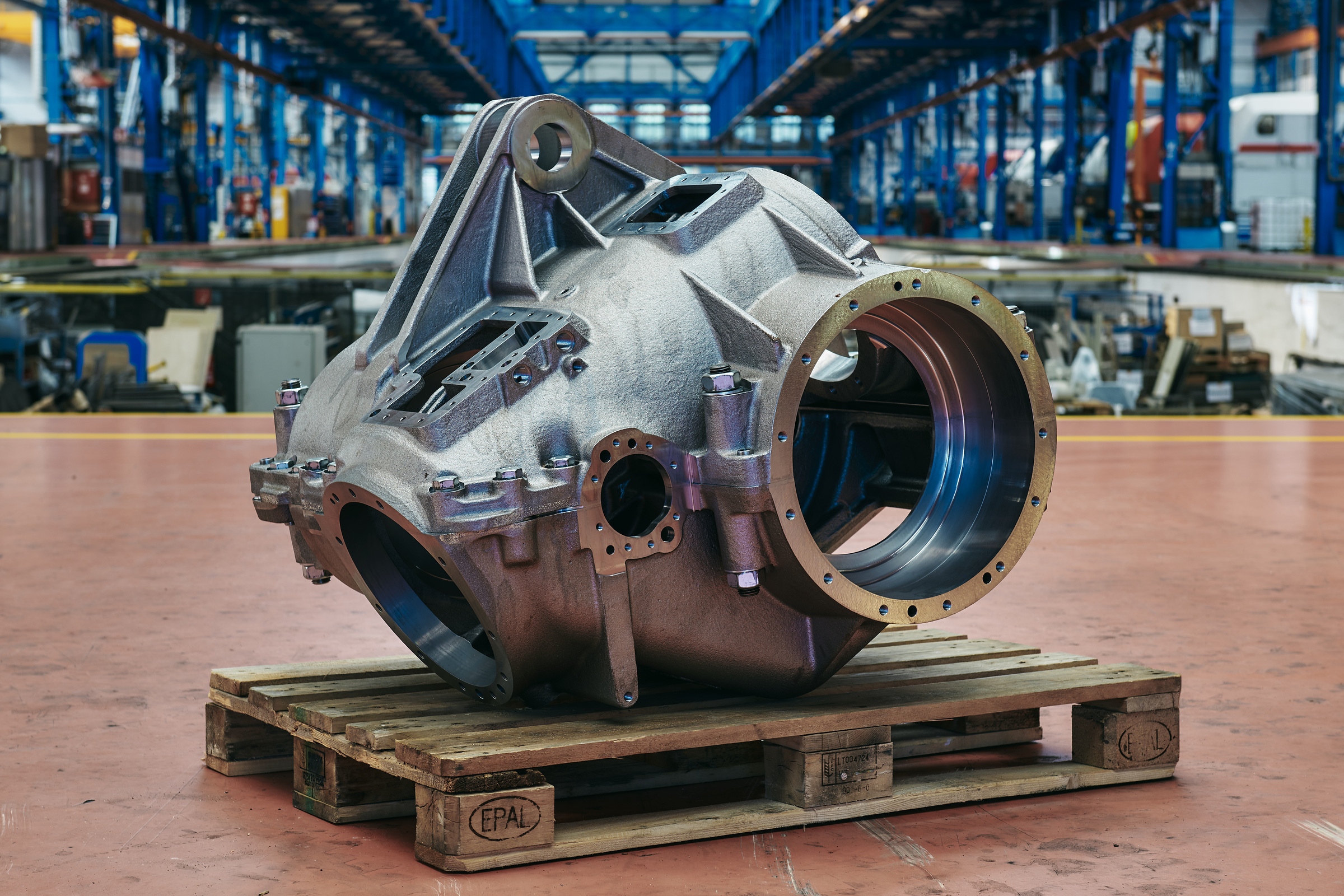
Deutsche Bahn (DB) reaches the mark of 100,000 spare parts produced with 3D printing technology. The 100,000th part is a gear housing for shunting locomotives. With just under one cubic meter of volume and a weight of 570 kilograms, it is the largest and at the same time heaviest 3D printing part that the group uses. The spare part is indispensable for the operation of the shunting locomotive – without the transmission housing, the vehicle stands still. In the future, around 370 locomotives will benefit from the speed of the new process, can be repaired faster and used again in shunting operation.
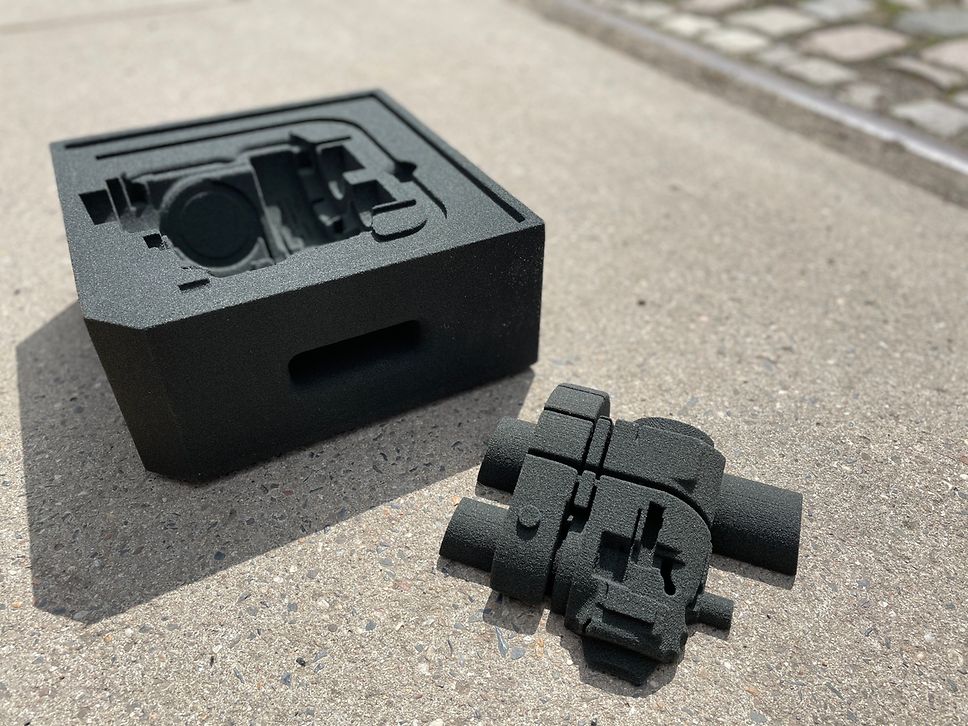
On the conventional procurement route, the part would only have been available from the locomotive manufacturer with long delivery times of an average of ten months. By deciding on a replica with 3D printing technology, DB shortens the delivery time to two months. The new transmission housing is produced in the indirect 3D printing process by means of binder jetting. A powdered starting material is connected with a liquid binder to form into which the transmission housing is later poured.
The transmission housing is part of the digital warehouse, which DB is continuously expanding. Virtual technical drawings of spare parts are stored in the database. If necessary, these parts can then be produced quickly and easily with a mouse click with 3D printers. This saves logistics space, storage costs, shortens delivery times and logistics chains and thus creates independence. Because in recent years, global crises such as the corona pandemic or the war in Ukraine have revealed the vulnerability of complex supply chains.
DB thus also ensures more sustainability. Shorter routes and smaller physical warehouses avoid CO2 emissions and waste of resources due to unnecessary stocks. In addition, 3D printing in itself already saves resources. Because only the actual raw material needed is used in the production. This is more economical than so-called machining processes in which parts are milled out of a block. In addition, 3D printing extends the life cycles of the vehicles. Because this allows Deutsche Bahn to manufacture components that are no longer available from the manufacturer.
Daniela Gerd tom Markotten, DB Board member for Digitalization and Technology: “3D printing transforms maintenance. It saves time, costs and resources because we can produce spare parts through a “digital warehouse” at the push of a button and do not require large stocks. In times of global supply bottlenecks and raw material shortages, 3D printing is more important than ever.”
DB is the world leader in 3D printing for the railway industry. What began in 2015 with simpler spare parts such as a plastic jacket hook has now developed into 100,000 parts for over 500 different applications. More and more of them are operationally relevant. Including steel parts such as wheelset bearing covers for shunting locomotives, a box backdrop for ICE trains or the transmission housing of the shunting locomotives. Currently, about 1,000 virtual models are stored in the digital warehouse. By 2030, around 10,000 different components are to be stored in this way.
In the production, DB uses its own printers and its partner network. At the end of 2016, the group launched the “Mobility goes Additive” network. More than 140 companies – from users, printing machine manufacturers and printing service providers to universities and start-ups – are now working together here to drive innovation together. Various printing processes are used, including material extrusion, the powder bed process or binder jeting.